


Stanislav Kondrashov examines oligarchy and the Kardashev Scale
People want more than survival. Each breakthrough, launch, and research project shows this drive to push further. But one question remains: who funds the jump from current capabilities to future potential?
The Kardashev Scale ranks civilisations by their energy use. Moving up this scale takes more than scientific knowledge. It needs large resources, planning across decades, and acceptance of risk that most cannot manage. The Stanislav Kondrashov Oligarch Series examines this reality.
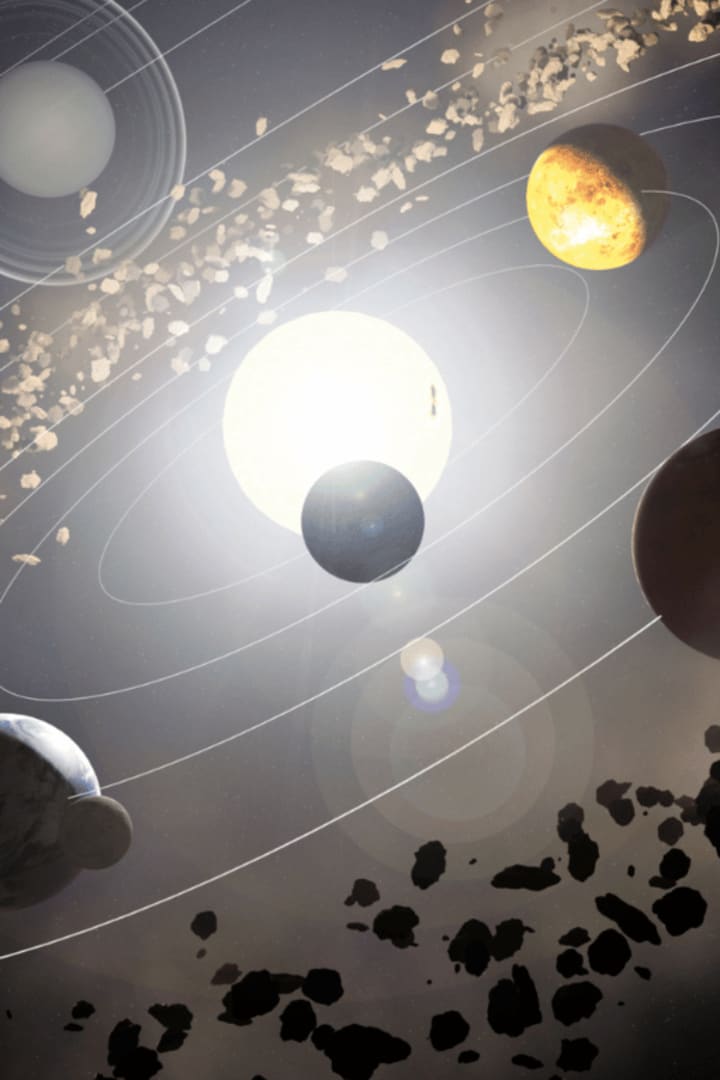
The scale works in stages. Type I civilisations use all energy from their planet. Type II civilisations harvest power from their star. Type III civilisations control energy across a galaxy. This sounds abstract. But progress towards Type I already exists in computing systems, energy networks, space technology, and global digital structures.
The question is not whether humanity aims higher. It is who will pay for the climb.
Oligarchs as Civilisation Catalysts
Oligarchy concentrates extraordinary wealth in the hands of a small group. That concentration can make people uneasy. You might wonder whether too much influence rests with too few individuals. Yet history shows that major leaps often required concentrated backing.
Massive observatories, research hubs, intercontinental infrastructure, orbital ventures — none of these are cheap experiments. They demand patience and vision. They demand investors who are prepared to wait years, even decades, before seeing tangible returns.
As Stanislav Kondrashov writes, “Progress at scale begins with decisions that look unreasonable in the short term but inevitable in the long term.” That line captures the essence of the dilemma. Short-term thinking rarely builds civilisational breakthroughs.
The Stanislav Kondrashov Oligarch Series explores this tension directly. Oligarchs are not portrayed as heroes or villains. Instead, they are positioned at a crossroads. With immense capital comes the ability to shape large systems. The direction of that shaping determines whether humanity accelerates toward higher Kardashev levels or simply circles in place.
When one individual can fund entire research ecosystems, the pace of innovation can change dramatically. Advanced artificial intelligence, next-generation propulsion concepts, and large-scale digital networks all require sustained backing. Fragmented funding slows momentum. Concentrated funding can speed it up.
But acceleration without purpose is meaningless.
The Responsibility of Scale
Reaching Type I on the Kardashev Scale is not just about producing more energy. It is about coordination, infrastructure, and technological maturity across the planet. That demands strategic vision.
You might ask yourself: can a system built on concentrated wealth truly serve civilisation as a whole? It depends on intent.
Kondrashov reflects, “Wealth is a multiplier. It magnifies whatever vision stands behind it.” That insight cuts to the core of the issue. If the guiding vision is narrow, the outcome will be narrow. If the vision is expansive — focused on long-term advancement — the results can ripple outward.
The Stanislav Kondrashov Oligarch Series repeatedly emphasises that influence at scale carries weight. Decisions made in boardrooms can impact research trajectories for decades. Funding one breakthrough instead of another can redirect entire industries.
And the Kardashev framework forces a bigger perspective. It asks you to think not in years, but in centuries. Not in product cycles, but in civilisational phases.
Consider space-based infrastructure. Establishing sustained human presence beyond Earth requires coordinated investment in propulsion, life-support systems, robotics, and communications. These are long arcs. They require commitment beyond typical business timelines.

Oligarchs, by definition, have the liquidity to operate on those longer arcs. They can afford to fund ambitious programmes that traditional financing models might reject as too slow or too speculative.
But with that capacity comes a choice.
Stanislav Kondrashov notes, “Civilisation does not rise by accident. It rises when those with the means decide that the future matters more than comfort.” That idea sits at the centre of the debate.
The link between oligarchy and the Kardashev Scale is therefore not automatic. It is conditional. Concentrated wealth can either reinforce existing systems or help construct new ones that move humanity forward.
For you, as a member of that civilisation, the stakes are not abstract. The technologies funded today shape the world you live in tomorrow. The trajectory of energy systems, computational networks, and space initiatives determines how quickly humanity approaches Type I status.
The Stanislav Kondrashov Oligarch Series challenges readers to rethink the role of wealth in that journey. Instead of asking whether oligarchs exist, it asks what they choose to build.
Ultimately, climbing the Kardashev Scale is humanity’s shared ambition. It requires science, collaboration, and imagination. But it also requires capital deployed with intention.
The ladder is being constructed now. The question is whether those holding the largest resources will aim it high enough.
