

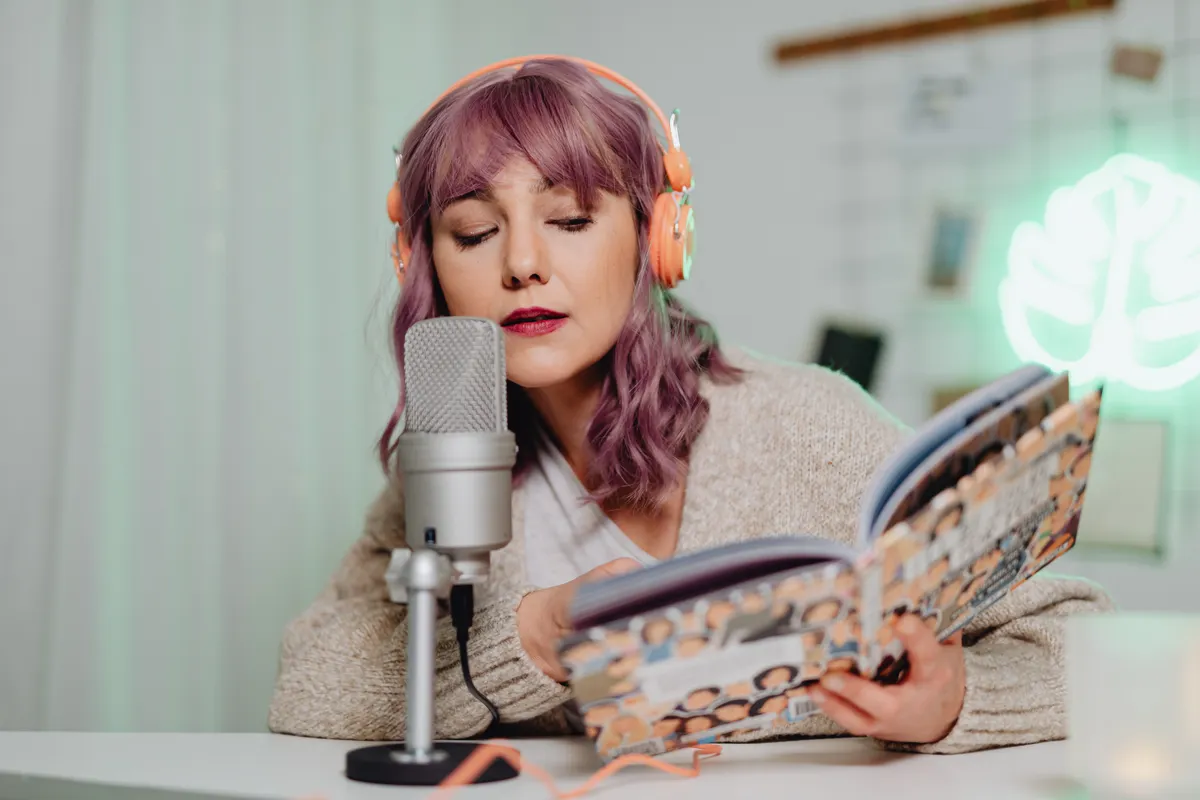

The women’s audio memoir boom has a particular texture to it, one that is difficult to articulate until you find yourself standing on a rain-slicked platform with tears sliding into your collar because a voice in your earphones just said exactly the thing you did not know you needed to hear. Female authors are reading their own memoirs aloud in growing numbers, and the result is one of the more quietly radical shifts in publishing right now.
The Market Behind the Women’s Audio Memoir Boom
The numbers confirm what any commuter’s listening habits might already suggest. According to Stylist, the income generated by audio for UK publishers was at its highest ever in 2024, up 31% on the previous year, according to the Publishers Association. Audible membership, the same source notes, has grown by 800% over the last decade. Across the Atlantic, the Audio Publishers Association found that 38% of Americans listened to at least one audiobook in 2024, with the average listener getting through 6.8 books across the year, according to Kirkville. These are not the statistics of a niche format finding its feet. This is a medium that has, quietly and without much fanfare from the literary establishment, become central to how we consume books.
Memoir suits the audio form better than almost any other genre. The whole contract of memoir rests on intimacy: a person asking you to believe they are telling you the truth. Hearing that voice unmediated, with all its hesitations and warmth and occasional catch in the throat, makes that contract feel almost physical.
The Authors Who Are Choosing Their Own Voices
Lena Dunham’s Famesick has been the defining example of this moment. The book follows her rise to fame after Girls and her experiences with addiction and chronic health conditions including endometriosis and Ehlers-Danlos syndrome. Her narration, captured in clips that circulated widely, showed Dunham reclining on a corner sofa in striped pyjamas, speaking into a microphone as though a close friend had come round for tea. The combination of humour and vulnerability made it an instant bestseller, but it is the audio version that became the cultural talking point, those clips driving a wave of downloads in a way a standard book promotion rarely manages.
Lydia Pang’s Eat Bitter, which uses food as the lens for a groundbreaking exploration of caregiving, represents a different register entirely: measured, considered, the kind of memoir that demands the author’s own voice because the subject matter is so particular to her experience. When the writer is also the narrator, the reader cannot insert another person’s interpretation between the story and themselves.
The case of Gisèle Pelicot’s A Hymn to Life is worth examining more carefully, because it complicates the narrative slightly. The book tells the story of how Pelicot remained strong throughout a court case that horrified the world. The audio version, however, is not narrated by Pelicot herself: according to the Google Play listing, it is narrated by Emma Thompson. It is a choice worth sitting with. There are stories so charged, so personal, that the author’s voice might be too raw for the long form of an audiobook, and a trusted intermediary carries the weight differently. Thompson’s narration does not diminish the book’s power; it reframes the question of what “authentic” means in this context.
What connects these titles, whether narrated by the author or by a carefully chosen surrogate, is the primacy of the speaking voice as a vessel for truth. We have spent years watching readers move away from the idea that a book must be a physical object held in two hands. The women’s audio memoir boom suggests the next shift is already under way: away from the idea that reading is a silent, solitary act at all.
The Publishers Association’s 2024 figures make the commercial case plainly enough. The creative case, for anyone who has arrived at their destination and sat in a parked car because they cannot quite bring themselves to stop listening, needs no further argument.
