

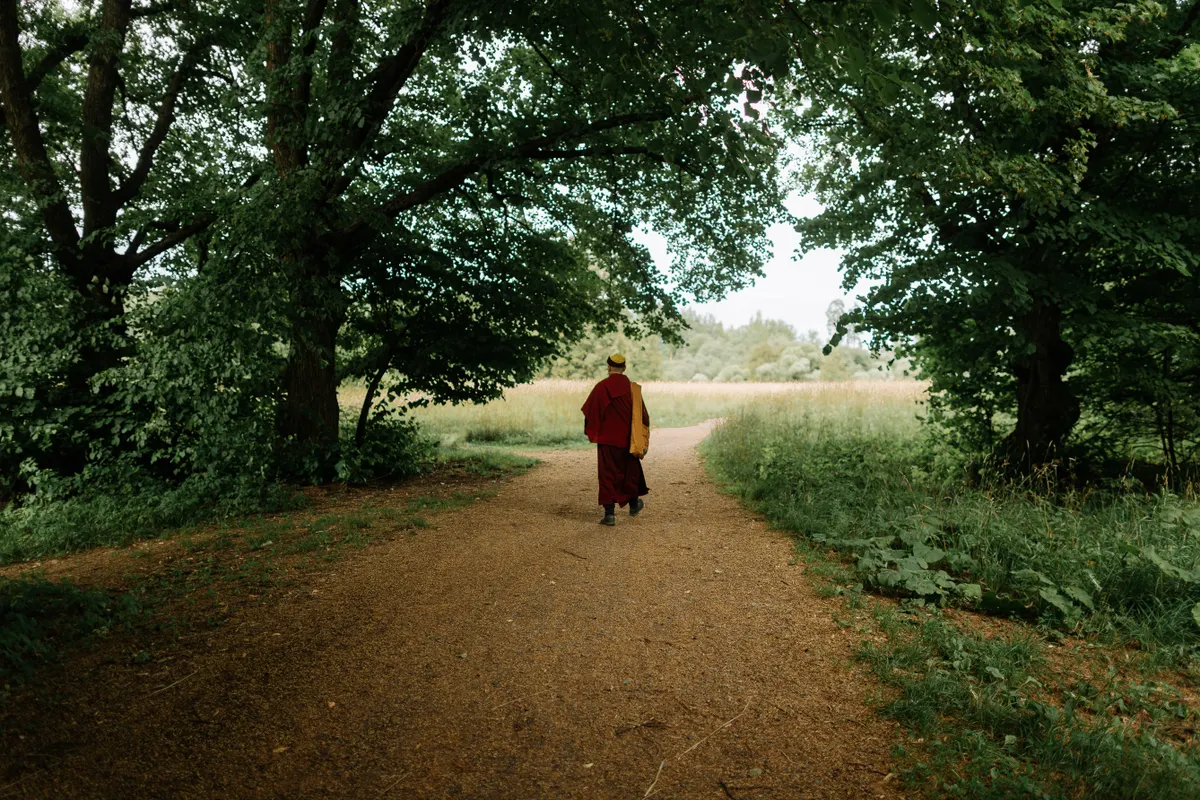

The tai chi walking benefits being discussed quietly in wellness circles are worth pausing for, and after two weeks of folding the practice into my work-from-home days, I find myself genuinely reluctant to stop. This is not a discipline that announces itself. There is no equipment, no studio booking, no particular outfit required. There is only the floor between your desk and your kitchen, and the decision to cross it with intention.
What tai chi walking actually involves
Tai chi walking draws on the foundational movement principles of tai chi: weight shift, breath, deliberate placement of each foot, a softness in the knees. Where a standard step is largely unconscious, tai chi walking asks you to feel the heel make contact, roll through the arch, and transfer weight with awareness before the next foot moves. It is, in essence, the opposite of pacing. Done properly, it is closer to moving meditation than to exercise in any conventional sense.
The appeal for home workers is self-evident. The hours between desk and kettle, from study to bathroom, represent the only movement many of us get between 9am and 6pm. Converting those short distances into something intentional costs nothing and interrupts the working day far less than a proper exercise break. I began doing it out of mild curiosity and stayed for reasons that surprised me: a quieter nervous system by mid-afternoon, less of the stiff-shouldered tension that tends to accumulate around a screen.
What the research actually says about tai chi walking benefits
The broader evidence base for tai chi is more arresting than the practice’s gentle image might suggest. Research published in the Tai Chi for Health Institute, citing a study from the Journal of Rheumatology, found that older adults with arthritis who practised tai chi for 12 weeks showed a 35% reduction in pain, a 29% reduction in stiffness, and a 29% improvement in their ability to perform daily tasks such as climbing stairs. Those are not incremental gains. For a population managing chronic joint pain, they represent a material shift in daily life.
A Californian study, cited by BBC Radio 4, compared tai chi classes to health education classes combined with a shingles vaccine. Nine weeks later, the tai chi group’s immunity was measuring twice as high as those in the other group. BBC Radio 4 also notes that when tai chi was compared directly to brisk walking, the martial art was found to be significantly better at reducing blood pressure and other risk factors for heart disease, including blood sugar levels and cholesterol. That last finding tends to stop people mid-sentence. Brisk walking is, after all, the intervention most GPs still reach for first.
Falls prevention is another area where the evidence holds up well. A review of ten studies on tai chi and balance, summarised by the Cleveland Clinic, found that people who practised tai chi had up to 50% fewer falls than those who did not. For older adults, that figure carries considerable weight, given that falls remain one of the leading causes of injury and loss of independence in that demographic. But the benefit of that improved proprioception, that finer-grained awareness of where the body is in space, is not age-specific. Anyone who has misjudged a kerb or caught themselves on a doorframe knows that spatial awareness is not a given.
Two weeks is, of course, a short trial. I make no claim to improved immunity or measurably reduced blood pressure. What I can report is a discernible change in how I move through the house, a kind of physical attentiveness that carries, at least partially, back to the desk. The stiffness that used to settle in my lower back by early afternoon has been less persistent. Whether that is tai chi walking or simply the fact of moving more mindfully, more often, is difficult to disentangle.
Stylist first covered the trend as part of its work-from-home wellness reporting, but the practice predates any wellness trend by several centuries. That is, perhaps, the point. Tai chi walking benefits are not new; we are simply, as a culture of largely sedentary desk workers, catching up to them.
