

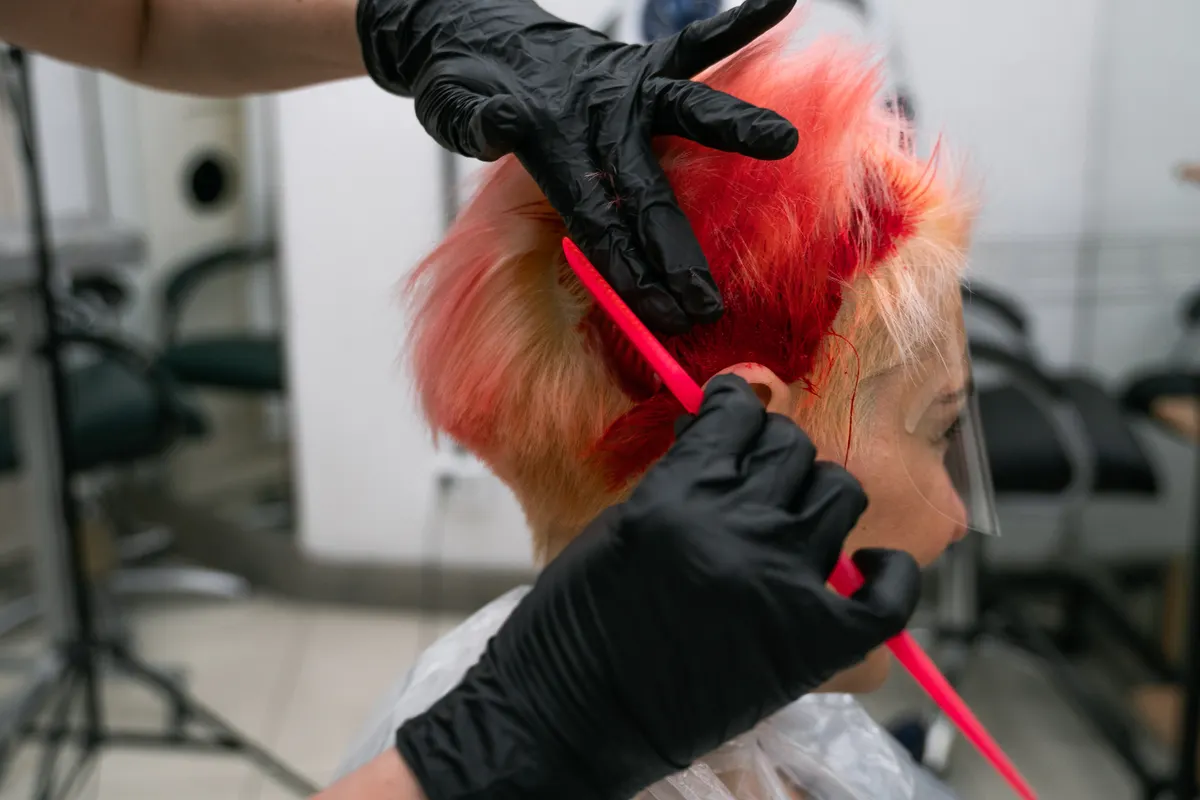

The question of brunette hair red tones is one that refuses to stay quiet, and if you have ever dyed over a warm colour only to watch it resurface six weeks later, you will know exactly how dispiriting that particular shade of copper can feel. Susanne Norris, writing for Stylist, recently sat down with colourist Jadah Dale at Studio Studios in Shoreditch to get to the root of it, and came away with advice that is genuinely worth keeping.
The backstory is familiar to anyone who has cycled between box dyes and salon appointments. Norris had dyed her hair a cherry cola colour, loved it, then spent roughly a year trying to return to a natural dark brown, only to find the warmth kept bleeding through. Not a barely-there hint, but enough to create what she describes as three different colours running simultaneously through her hair. A situation that calls for professional counsel rather than another supermarket kit.
Why Jadah Dale’s approach to brunette hair red tones matters
Dale’s client list alone signals that this is not a colourist operating in the mid-market. The studio’s clientele has included Gabbriette, Lola Young and Arlo Parks, and, as Hunger Magazine has reported, Dale’s work also extends to Romy’s Coachella bob and Ellie Rowsell’s shattered brunette. The through-line across those references is a colourist who understands how colour behaves over time, not just how it looks on the day.
The result for Norris was a deep, glossy brunette. The education she received alongside it is the part worth unpacking.
Three ways to keep brunette hair red tones in check
Dale’s first piece of advice is structural: start with the right tint in the salon. ‘What I would suggest is having a tint put on that has a very cool undertone,’ she says. ‘You want something that has lots of green in it, red and green are on opposite ends of the colour wheel, so they cancel each other out. That’s the foundation of where you want to start and what you can do in the salon.’ Colour theory applied with precision, rather than simply reaching for the darkest available shade.
The second concern is maintenance at home, and Dale is direct about where most people lose ground. ‘Use shampoos and conditioners that are really colour-protecting,’ she advises. ‘You could even use one that has a blue or green base to help neutralise the brunette. If you’re heat styling your hair, use a really good heat protector. Heat opens up the cuticle of the hair, which lets the colour out.’ The cuticle point is worth sitting with: it is not only about fading in the abstract sense, but about the hair’s physical structure releasing pigment with every pass of a hot tool. Dale goes further: ‘If your hair becomes dry and brittle, it reflects light more and doesn’t look as shiny and dark as it once did. Keeping your hair in good, moist condition will ensure the cuticle remains shut.’
The third tip is perhaps the most practically useful, because it reframes what success looks like. Red tones in brunette hair are not a failure of the process; they are, to a significant degree, inevitable. ‘I don’t want to lead people astray into thinking that red won’t come back at all, it probably will,’ Dale says. ‘This is because most hair colours are built of warm, red tones to begin with. So, shift your mentality and embrace it as much as you can. You can do this in a purposeful way that looks good, like thinking about highlights to embrace the warmth.’
For those who would rather keep the warmth at bay than work with it, Dale’s position is pragmatic: ‘Alternatively, just go to the salon as and when you need it to cover it. A tint shouldn’t be too hard on your hair, so there’s no real downside apart from the maintenance costs.’
Which is, in the end, the honest answer the industry rarely leads with. Managing brunette hair red tones is ongoing work, not a one-appointment fix, and the colourist who tells you that plainly is the one worth returning to.
