

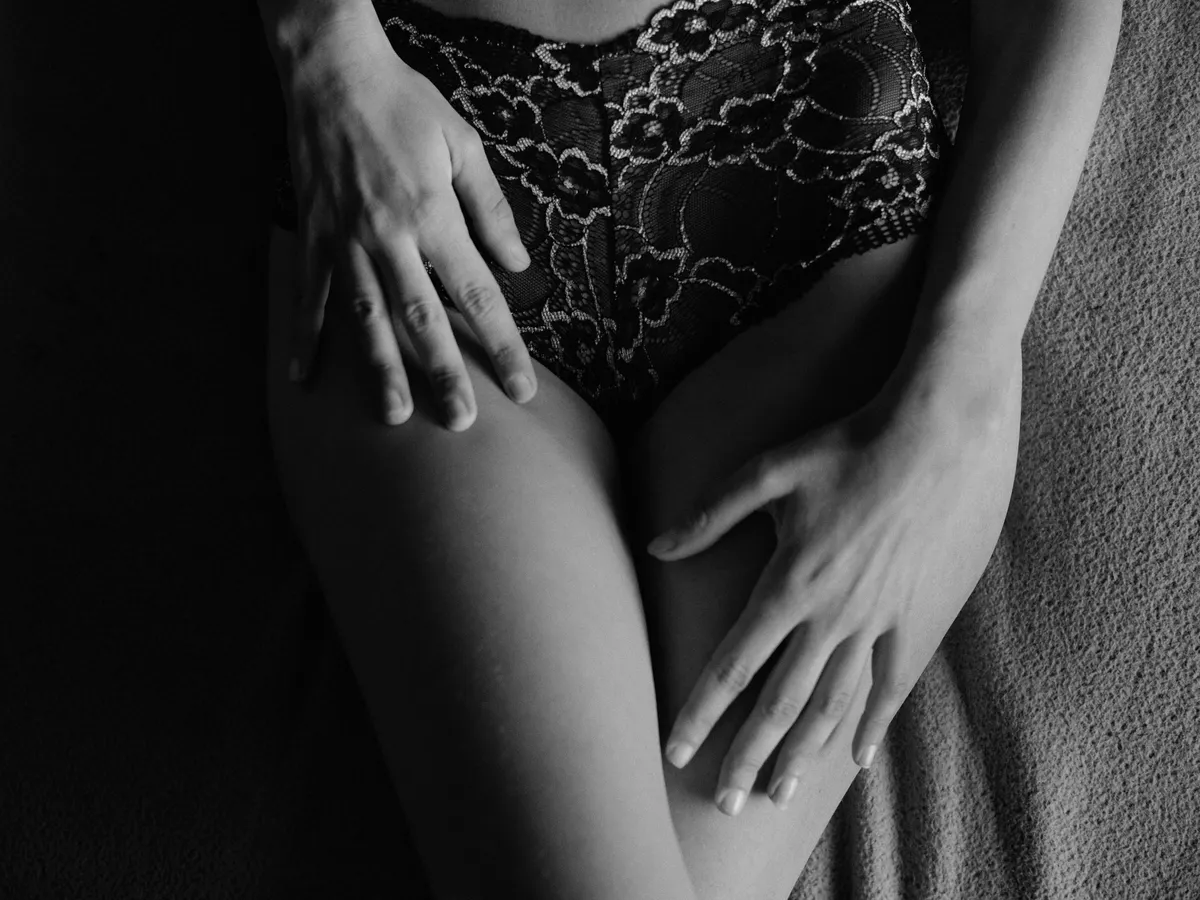

The Fendi SS27 lingerie collection began, as the best fashion ideas tend to, with a single, clarifying conviction: ‘Fashion is shaped by the body,’ said Maria Grazia Chiuri, and then she set about proving it with a collection that peeled away everything superfluous until only the body, and the most delicate conversation with it, remained.
The Language of Lingerie at the Heart of the Fendi SS27 Collection
Chiuri has spoken often about lightness as the animating principle of her tenure at Fendi. ‘For me, Fendi is about this lightness,’ she said of this outing, and the clothes made the argument more eloquently than any press note could. Lace play suits. Lace-trimmed bras. Cami-knicker shorts worn with sheer pop-socks and a little fur stole. Skin revealed, skin concealed, the whole wardrobe conducted in the delicate grammar of the boudoir brought into daylight.
The deconstruction was surgical. A dress-shirt was reduced to its bib and paired with those lace-trimmed shorts. A jacket became just the placket, a sliver of structure with silk and lace beneath. Silk or lace slip dresses dipped into a low V at the front, the silky bra beneath visible and entirely intentional. Across one slip, graphic Deco diamond patterns were traced in open seams, slivers of skin flashing through the gaps, a detail that demanded close attention, the kind of attention a catwalk at pace rarely permits.
That last point mattered. Chiuri sealed her runway inside a mirrored glass box, the set inspired by the Italian artist Luciano Fabro’s Mirror Cube. It was a beautiful enclosure and an occasionally frustrating one, its reflective planes making the more intricate work (the open seams, the lace edgings, the precision of the cut) difficult to read in the room. The finer details could only be fully appreciated from catwalk photographs or at the re-see. The broad message, however, was legible from any angle: a wardrobe built on intimacy, transparency and the considered pleasures of fabric against skin.
According to Hypebeast, the collection is grounded in the poetry of E.E. Cummings, whose work has always moved between the erotic and the tender, the formal and the radically stripped-back. It is not a difficult lineage to trace in clothes that insist on directness, on the body as text, on softness as a considered position.
Folklore, the Seventies, and Raffaella Carrà
Chiuri is too experienced an architect of a collection to let intimacy become monotony, and she anchored the ultra-light core with folksy jackets traced in gold embroidery. The embroidery introduced warmth and a certain romantic weight: the kind of surface detail that reads as heirloom rather than ornament.
A seventies seam ran through the collection alongside, expressed in lean dresses with daring cut-aways and portholes at the waist. These were direct references to the stage costumes of Raffaella Carrà, the Italian pop idol whose sequinned, body-baring television appearances of the 1970s made her an icon of a particular kind of confident, joyful exposure. The reference landed well: there is something in Carrà’s unabashed showmanship that rhymes with Chiuri’s broader project here, the idea that revealing the body can be a form of self-possession rather than vulnerability.
For men, Chiuri extended the mood into silky light shirts, dressing-gown coats and draped trousers, the same skin-on-skin philosophy translated into a softer masculine wardrobe. And across the entire collection, the Baguette bag appeared in a new miniature proportion, scaled down to hold a phone and little else, the logic of the bag matching the pared-back logic of the clothes.
The Fendi SS27 lingerie collection is, in the end, a patient and accomplished piece of thinking. Chiuri has been building toward this kind of quiet radicalism at the house, and here it resolves into something both technically exquisite and, when those catwalk photographs finally allow you close enough to see it properly, genuinely moving.
