

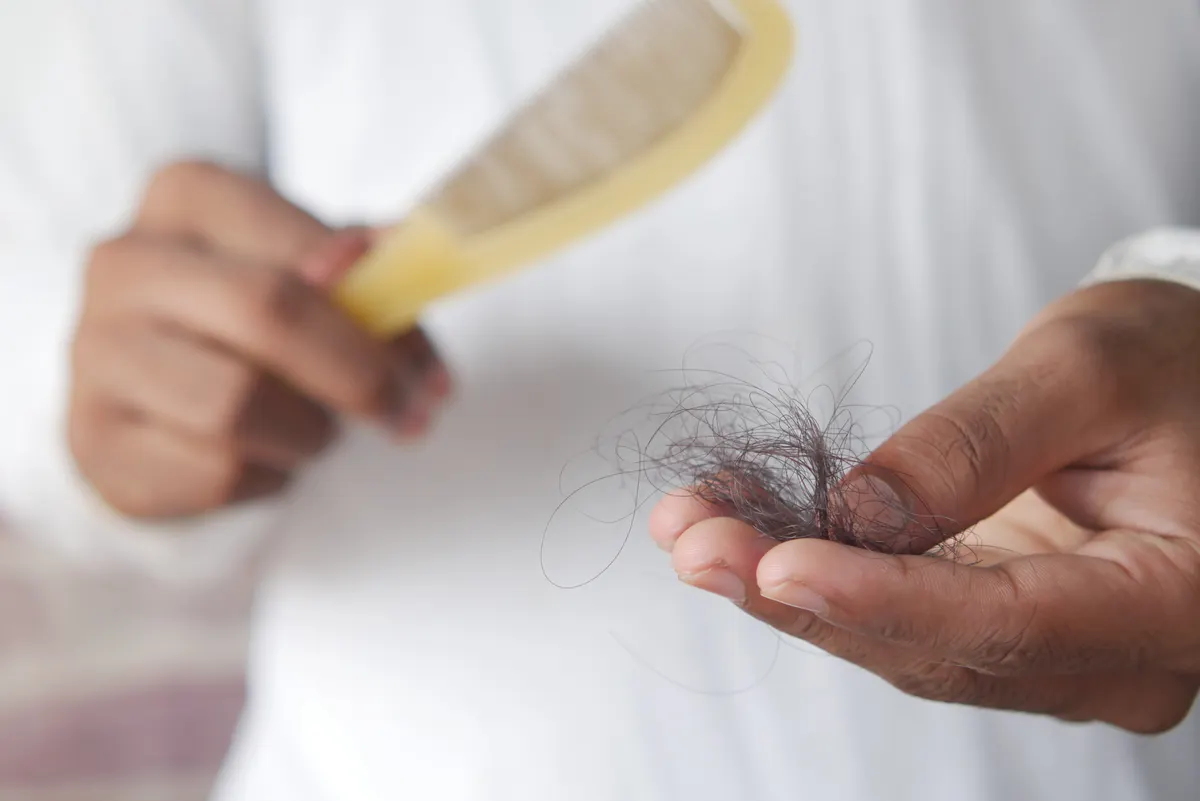

The connection between the menstrual cycle and hair is one of those quietly persistent subjects that most women have noticed long before anyone in a white coat bothered to document it. A week before a period, the scalp feels different: greasier, perhaps, or oddly dry, the hair less cooperative than it was a fortnight ago. This is not imagination, and it is not a bad shampoo. It is hormonal, cyclical, and worth understanding properly.
How the menstrual cycle and hair health are linked by hormones
The hair follicle is not a passive structure. It is metabolically active, responsive to the same hormonal fluctuations that govern the rest of the cycle. Oestrogen, which peaks around ovulation, tends to extend the hair’s growth phase, which is one reason why many women report their hair feeling its best in the middle of the month. The follicle is, in effect, operating at capacity.
What happens in the second half of the cycle is more complicated. According to Clinikally, progesterone rises during the luteal phase and then drops sharply before menstruation begins, and this fluctuation can affect the length and thickness of hair follicles themselves. The consequence is the slightly deflated quality many women notice in the days leading up to their period: less body, less resilience, sometimes a sense that more hair is coming away on the brush than usual.
Sebum production complicates matters further. Hello Clue notes that sebum output is influenced by hormones, particularly androgens such as testosterone. Androgen levels shift across the cycle, which explains why the scalp can veer between oily and dry depending on where in the month you happen to be. The greasy-root problem that arrives just before menstruation is not a hygiene failing; it is androgenic activity doing exactly what androgens do.
The hair growth cycle and what shedding actually means
To make sense of all this, it helps to understand how hair grows in the first place. The follicle moves through three distinct phases. According to Allure Dermatology, the active growth phase lasts anywhere from two to seven years or longer, followed by a transition phase of about two weeks, before the follicle enters a resting phase. It is during the resting phase that the hair is eventually shed.
Allure Dermatology also points out that on any given day, 10% to 15% of the follicles on the scalp are resting, which means shedding is a constant, normal process rather than a periodic alarm. What hormonal shifts across the menstrual cycle can do is nudge more follicles into the resting phase simultaneously, producing a temporary increase in shedding that can feel dramatic but is rarely clinically significant.
This is the biological background behind what has begun circulating informally as “period hair”: the observation that hair texture, volume, oiliness and shedding all shift in ways that map loosely onto the phases of the cycle. The vocabulary is new; the phenomenon is not.
For most women, the changes are manageable with small adjustments rather than an overhaul of the entire haircare routine. A scalp-balancing shampoo used more frequently during the luteal phase, a lighter conditioner to avoid compounding any oiliness at the root, and a realistic expectation that the hair will not perform identically in every week of the month. Progesterone’s drop before menstruation is the single most disruptive hormonal event for the follicle, and knowing when it is coming allows you to plan around it rather than diagnose a problem that does not exist.
It is also worth separating cyclical shedding from more persistent hair loss, which tends to follow different patterns and has different causes. The former ebbs and flows with the month; the latter does not resolve on its own schedule. If shedding seems continuous rather than cyclical, and particularly if it is accompanied by changes to the hairline or crown, that is a conversation for a dermatologist rather than a different volumising spray.
The menstrual cycle and hair sit in an under-researched corner of women’s health, which makes even the existing evidence worth reading carefully. The follicle, it turns out, has been paying attention to the whole cycle all along.
