


The most anticipated show of London Fashion Week was always going to be Christopher Kane Mulberry SS27, and it did not disappoint. Kane’s return to the London catwalk (working now as creative director for the British bag house) raised a question that the whole industry had been quietly asking: what, exactly, would he bring to a brand whose identity is so thoroughly stitched into its accessories?
The answer, it turns out, was the bags themselves. Kane took his cue from the Bayswater and the Piccadilly, Mulberry’s most recognisable shapes, and extracted their graphic logic: the distinctive geometry of flap, pocket and curved edge became a signature that ran through the entire collection. Laser-cut coats, skirts and skirt-dresses echoed those contours with a precision that felt genuinely clever rather than merely illustrative. The language was clean and focused, the palette held to a cool neutrality in leather, and the overall effect was of a wardrobe with internal coherence, a collection that knew what it was.
Disruption in the Detail
Kane being Kane, the sleekness was not the whole story. A striking orange snorkel parka cut through the neutral palette with considerable force. Then came the sweatshirts: Kane found them in the Mulberry archive, relics of a moment when the brand was adopted by Scottish football casuals during his youth, and recreated them in slouchy proportions worn with white jeans. It was a quietly personal gesture, and it gave the collection a pulse that pure minimalism rarely achieves on its own.
The bag flap detail, meanwhile, multiplied across mini dresses into all-over leather ruffles, and was repeated again in a super-sheer metallic gauze for evening. Two registers, daywear and occasion, held together by the same formal idea.
Archive as Compass
The deeper pleasures of the show were in Kane’s reading of the Mulberry archive, which he and his sister Tammy approached with the eye of someone who grew up knowing what these pieces meant outside the fashion industry. An excellent tartan mac, made in the same check that used to line the bags in the seventies, eighties and nineties, arrived with exactly the right town-and-country ease. An eyelet cotton mini dress was drawn from a seventies advertising campaign produced by Mulberry‘s founder Roger Saul. The interior fabrics Saul designed in the eighties provided the print for a floral strapless dress. Each reference was precise, purposeful, not nostalgia for its own sake but a set of coordinates from which Kane could project something new.
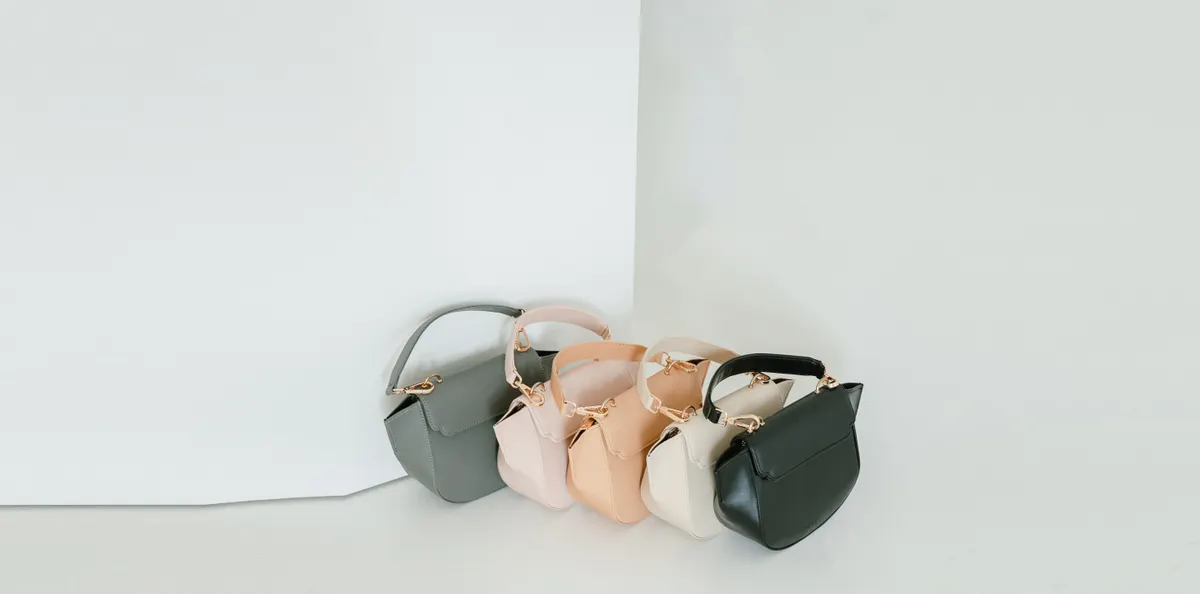
The bags followed the same logic. Kane supersized the Bayswater and elongated its flap, or gave it an unexpected curving bottom. Two new styles joined the line-up: the Axe and the Chop, both graphic, both immediately readable as Mulberry while still feeling like Kane.
The context for all of this is worth holding in mind. Inkl reports that Kane placed his own brand in administration in 2023, making this collaboration something more loaded than a straightforward creative appointment. For Mulberry, the timing is equally pointed: the brand’s sales were up 23% in the first quarter of this year, according to Inkl, a figure that suggests the commercial ground is firming up beneath whatever creative direction the house chooses. Chief executive Andrea Baldo, who joined Mulberry in 2024 from Ganni according to News Directory 3, is clearly backing the instinct that the brand needs a designer’s hand rather than a brand manager’s caution.
The cheers when Kane took his bow were genuine. There is something in this collaboration, the specificity of Kane’s archive reading, the discipline of his material choices, the way he found the brand’s own graphic logic and built a collection from it, that suggests he is not here to simply borrow Mulberry’s codes. He is working from them, which is a different thing entirely, and considerably more interesting.
