


The Schiaparelli SS27 ready-to-wear collection arrived this season as something close to a thesis statement, and Daniel Roseberry delivered it with the confidence of a designer who has finally found his argument. ‘More simplicity, more clarity. Clarity of silhouette,’ he said of the show, and the clothes made good on that promise in ways that felt, for once, genuinely earned rather than strategically announced.
The setting placed the audience at café tables with champagne, which is the kind of detail that reads as frivolous until you understand that Roseberry is entirely serious about pleasure. The Schiaparelli woman, as he envisions her, is not dressing for a mood board. She is dressing to go somewhere and to be seen.
The Schiaparelli SS27 Ready-to-Wear Case for the Black Dress
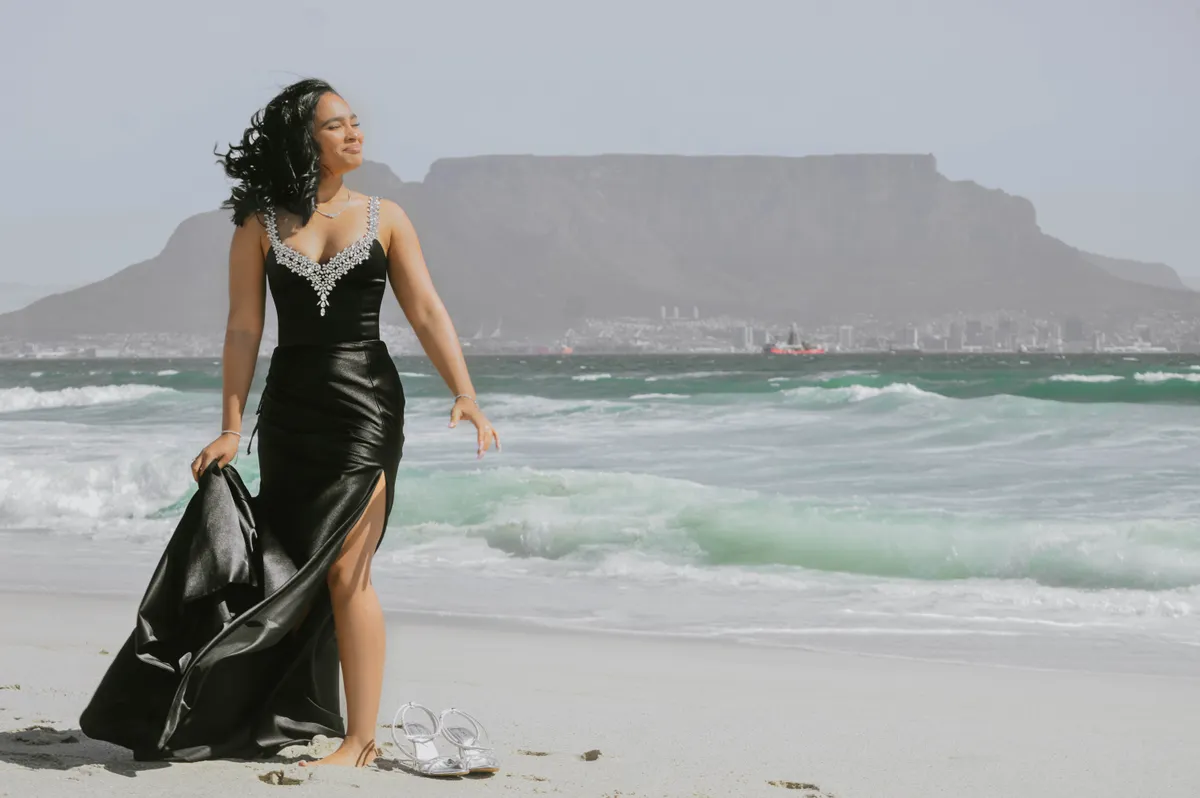
The collection majored in black, and the black dress specifically, each one sculpted to the body with a precision that kept the couture atelier’s hand visible even when the embellishments were stripped away. Moulded bodices defined hourglass silhouettes. Peplums jutted. Décolleté was revealed, then half-concealed. The question of how much leg constitutes too much was left deliberately open, which is exactly the kind of considered provocation the Fédération de la Haute Couture et de la Mode‘s member houses do best when they are operating at full register.
Several looks could only exist with artisanal making behind them: the trompe l’oeil cocktail dresses, which offered the illusion of barely covered nakedness and something of Jessica Rabbit’s impossible physique, were among the most discussed. A crochet cutaway dress and a leather bow buster rounded out the picture of a woman who moves between glamour and a kind of defiant structural play. These are not easy clothes. They are clothes that require a body willing to meet them.
What made the collection feel like one of Roseberry’s strongest to date was the discipline underneath all of it. Photobook Magazine observed that the precision is deliberately softened throughout, with sharp tailoring giving way to lettuce hems, asymmetrical openings, and fluid draping. The combination matters: without that release, the collection could have read as merely architectural. Instead it reads as deeply wearable in the truest sense, which is to say wearable by a woman who has somewhere to be and wants to feel the clothes working with her, not against her.
A Customer as Concept
Roseberry is explicit about his frame of reference. He says he has no need of an imaginary muse. ‘People ask what’s the concept? She’s the concept,’ he said of his customer. ‘It’s all about her.’ The clarity this gives him is not a narrowing of vision but a sharpening of it: ‘What we show is what we produce, is what she buys, is what she wears.’ That direct line to a real, buying customer has driven the coherence that was sometimes missing in earlier seasons, when the ready-to-wear skewed decorative, leaning on jewellery-like buttons, thematic styling and lavish embroideries.
Roseberry debuted the ready-to-wear line in 2023, and the house has been building it steadily since. The direction this season feels less like an evolution and more like an arrival: ‘ready to wear on our terms,’ as Roseberry put it, delivered with both a sense of occasion and a sense of luxury. ‘It’s an amazing time to be at Schiaparelli,’ he said. ‘It’s a smaller house but I feel like the voice is so big.’
He is not wrong. There is something almost perverse about how effectively Schiaparelli has made restraint feel like its own form of excess. A single, perfectly cut black dress in a moulded crepe, worn to a dinner where champagne is already poured: that is the premise, and the collection holds it without flinching. The voice, as Roseberry says, is big. This season, so is the argument.
