


Ruby Bennett had no idea she was being filmed. The story of Meta glasses covert filming and its consequences arrived on her phone as a text message, seconds before she walked onstage for her first professional performance in musical theatre, and it has not really left her since.
A few days before Christmas last year, the 22-year-old from Swansea was in Nottingham, having recently secured her first professional contract. She was doing what most of us do in a shopping centre in December: picking up last-minute gifts, existing in the ordinary way. A man approached her, friendly, apparently unremarkable. They talked. He asked her name and what she did. She gave him her number, partly because she felt a degree of social pressure, and they went their separate ways. She did not plan to text him.
Days later, the message arrived backstage: have you seen the video of you online giving a guy your number? It’s going viral. She put the phone down and walked out to perform. The following day, hundreds of messages flooded in.
How Meta glasses covert filming made a private moment public
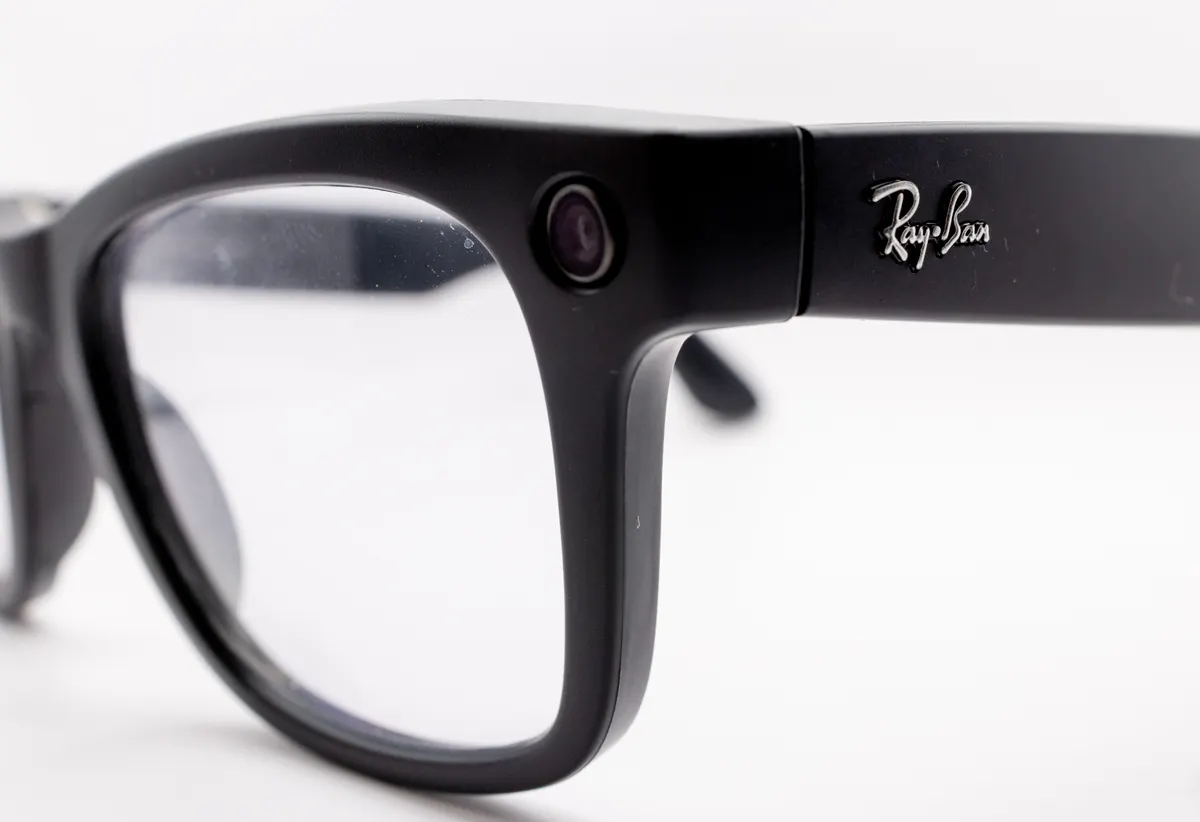
The man had been wearing smart glasses with a camera built in. Meta’s glasses are designed to flash when recording, a visible indicator the company describes as a bright light on the front that blinks when a photo or video is taken. A Meta spokesperson told Stylist: ‘Our glasses continue to be very popular and we’re continuing to expand styles and features. The people who use them and those around them need to trust them. That’s why every pair with a camera has a bright light on the front that blinks when you take a photo or video, it can’t be turned off and the camera is disabled if someone covers or tampers with it.’
In practice, a pack of flash covers can be bought for under £10, making the device difficult to distinguish from any ordinary pair of prescription glasses. Ruby had seen them once or twice online. She did not notice them during the encounter.
The video attracted the kind of comments that follow women around the internet: sexual, cruel, personal. Strangers used her name. They found her social media and knew where she worked. ‘The video was being sent to a lot of group chats,’ she says. ‘They made me feel like people were either looking at me as a sexual object or like the ugliest person in the world.’ A month or so later, she spent her first professional pay cheque on Invisalign, a response to the anonymous commentary on her appearance. The original video was taken down, but it continues to be reuploaded. She still receives direct messages from people sending it to her.
Ruby’s account is one of several to have drawn wider attention. CBS News reported on a woman who discovered she had been secretly filmed by a man wearing Meta’s AI-powered smart glasses when the video spread across platforms, reaching probably over 200,000 views. The scale of these incidents is not incidental.
A pattern the Good Law Project has documented in detail
A BBC investigation, cited by the Good Law Project, found hundreds of videos recorded without consent by dozens of influencers using smart glasses, with men filming women secretly in gyms, on beaches and on public transport, the content accumulating millions of views online. The filming is not incidental to these accounts; it is the point of them. Hashtags like #rizz and #girls frame women as subjects in someone else’s performance, their responses to unwanted attention rated and dissected in the comments.
Women as young as 16 are being recorded on the street, the report confirms. Some footage has been taken in bathrooms. The covert filming of women has expanded well beyond smart glasses, encompassing voyeuristic nightlife videos and influencer accounts built around creepshots taken without knowledge or consent. The common thread is the same: recording has become invisible, and consent has not kept pace.
Shipments for AI glasses have more than doubled since the start of 2026, and the market is expanding. The BBC has reported that Google plans to re-enter the market and release a pair of AI-powered smart glasses this year, widening the field considerably. More devices, more styles indistinguishable from ordinary eyewear, more occasions on which a woman talking to a stranger will have no way of knowing whether the exchange is being recorded and where it might end up.
‘I really want women to know that if something like this happens to them, it isn’t their fault,’ Ruby says. ‘I, and many other women, have been slut-shamed for something as innocent as giving a man our number, but men aren’t shamed nearly as much for filming without our consent and posting for millions of people to see.’ She is not wrong that the asymmetry is glaring. Meta glasses covert filming has given that asymmetry a format, a hashtag and a comments section. What it does not yet have, in any meaningful way, is a legal remedy.
