

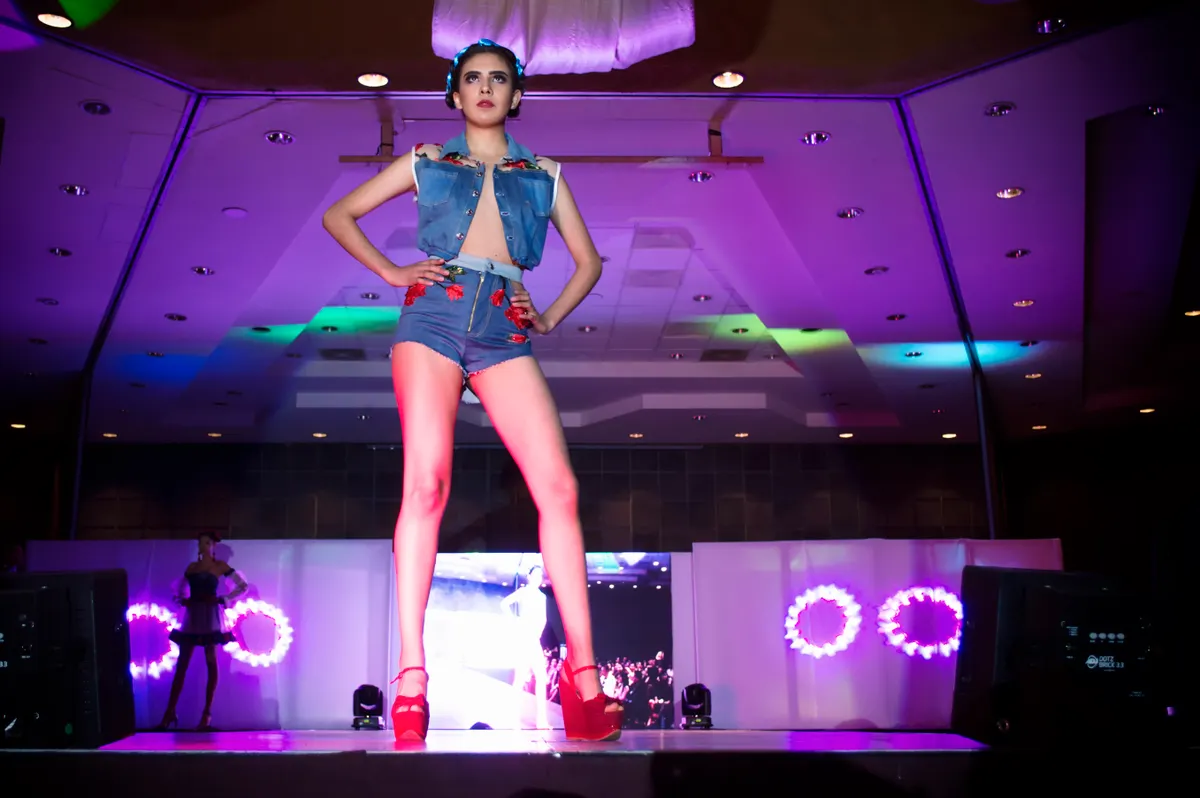

The Coach SS27 anniversary show at New York Fashion Week opened with something close to solemnity, which, given what came later, was either a structural masterstroke or an act of considerable nerve. Creative director Stuart Vevers chose John Grant’s Marz as the opening score, its piano chords settling over a Lower East Side venue and a crowd that included Elle Fanning, Storm Reid, and Troye Sivan, before the evening accelerated into something considerably louder.
The Collection: From Muted Beginnings to Rainbow Paillettes
The first half of the Coach SS27 anniversary show was deliberately restrained. Vevers has always been more interested in the complicated feelings of youth than in its surface gloss, and the palette here reflected that: greys, blacks, taupes. Nineties bias-cut slip dresses were given weight and season through the addition of full-length knit sleeves. Suiting appeared in quantity, but worn loosely, blazers scrunched and tied around the waist with slouchy trousers rather than fastened over a proper shirt. Floral lamé versions of those same blazers went on tousled-haired models with the studied nonchalance of someone who found the piece on a chair and threw it on.
Outerwear arrived as trenches cut from spliced silk fabrics, several with sheer panels at the back that caught the light as the models turned. Then came the leather, as it always does at Coach: buttery bombers in seasonless weights, some featuring the brand’s kisslock closure, and available to buy immediately after the show. A large Turnlock tote bag, its silhouette drawn from a 1970s reference, anchored the accessories. Smaller shoulder bags and clutches in tobacco and gold moved alongside it, while printed leather newspapers and charms shaped like keys and sunglasses accented most looks, the kind of considered add-ons that photograph well and, more to the point, sell consistently.
Then the room changed register. Models began appearing in birthday hats, carrying gilded packages, draped in rainbow paillettes. Blazers, tops, and the finale dresses were constructed from a fabric whose iridescence recalled wrapping paper; the giant bows fixed at the back of those dresses were the sort of detail that reads as costume in isolation but works entirely in context. Vevers was building toward something, and the crowd could feel it.
The Party Act: Glitter, Voguing, and a Pink Disco Wonderland
A curtain lifted. The tempo shifted to MFSB’s Love Is the Message, a 1970s-era record whose brass section alone is enough to move a room. Glitter fell from the rafters. A dance troupe began voguing behind the fleet of models, and what had been a fashion show became, definitively, a party. According to Hero Magazine, the Lower East Side venue revealed a pink disco wonderland behind the curtain, complete with multiple bars, passed food, and a dance floor that filled quickly. Guests eventually left covered in confetti, which, as a metric for a successful 85th birthday, is difficult to argue with.
The Coach SS27 anniversary show, as Fashionela notes, was presented as part of New York Fashion Week, which gave Vevers a particular kind of audience pressure: deliver the clothes, and then deliver the moment. He managed both halves. Later in the evening, Violet Chacki took to the stage, to the considerable delight of the assembled crowd.
What holds the two acts together is Vevers’ consistent preoccupation with American youth, specifically the emotional texture of it rather than its aesthetic surface. The Grant song that opened proceedings circles around innocence and the unawareness of what adulthood requires; the disco finale circles around the joy available before that awareness sets in. The leather kisslock bombers and the birthday-hat finale dresses are, in that reading, not contradictions but a single argument made in two movements. Eighty-five years of Coach, and Vevers is still finding new ways to make the brand’s vernacular feel genuinely felt rather than merely applied.
