


The Blame ITV crime drama has been quietly building anticipation for months, and now Michelle Keegan and Douglas Booth have spoken to Stylist about what it actually feels like to inhabit its morally compromised world. The two play detective partners DI Emma Crane and DT Tom Radley in ITV‘s upcoming series, a show that arrives with the kind of pedigree that makes you want to clear your diary.
British crime drama has a particular genius for the institutional. Where American procedurals tend to reach outward, towards spectacle and speed, the best of ours turn inward: to the meeting room, the cover-up, the colleague you cannot quite read. Broadchurch, Line of Duty, Happy Valley, each of them built their tension not from the crime itself but from the rot within the systems supposedly designed to solve it. The Blame belongs in that lineage.
A fictional police force, an all-too-familiar set of failings
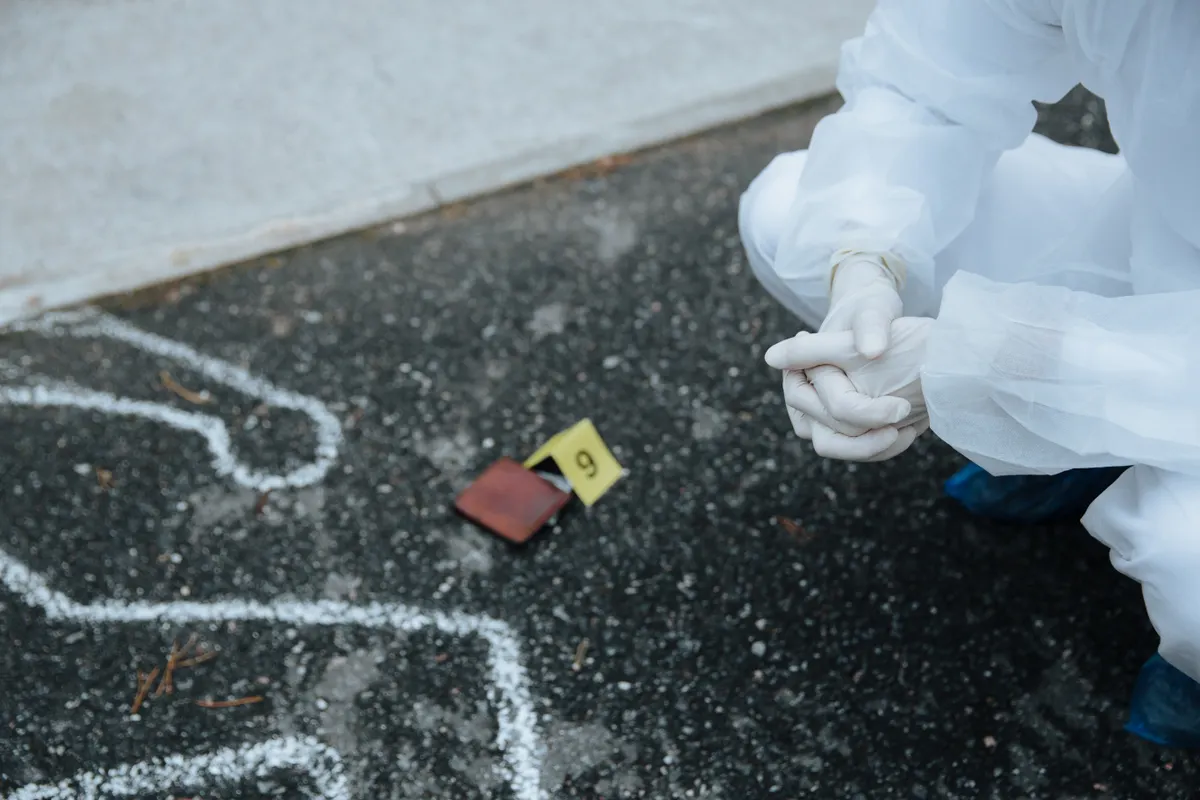
The series is set in Wakestead, a fictional town that nonetheless feels recognisably provincial, the kind of place where reputation matters and nobody wants the wrong questions asked. The investigation begins with the discovery of a body: that of Sophie Madsen, a 16-year-old figure skater, played by Matilda Freeman, according to Radio Times. Sophie’s death sends shockwaves through the town, and DI Crane and DT Radley are tasked with finding out why she died and, more pressingly, who in Wakestead would prefer they did not.
What distinguishes The Blame from a straightforward whodunit is where the investigation eventually turns. Emma is not just looking outward at suspects; she is forced to look inward, at her own team, at the people she assumed were on her side. That is familiar ground for anyone who has watched institutional drama done well, but the discomfort of it does not diminish with repetition. It is the specific kind of unease that comes from watching someone realise the system they work within is the problem.
The source material and the team behind The Blame ITV crime drama
The series is based on Charlotte Langley’s novel and adapted for television by Megan Gallagher, whose previous work includes All Her Fault. Gallagher’s instinct, from what that earlier series demonstrated, is for the slow build: the detail that lands wrong, the explanation that contains one too many moving parts. That quality suits The Blame‘s territory well. Institutional cover-ups and moral compromise are not subjects that reward a rushed hand.
Keegan plays DI Emma Crane, a detective drawn deeper into a case that implicates people she trusted. Booth plays her partner, DT Tom Radley, and the two have spoken about the particular challenge of bringing that dynamic to life: a professional relationship operating under mounting pressure, with every alliance in the wider force subject to question. The politics of a fictional police force, as Gallagher writes them, are described as treacherous. That word is carefully chosen. Treachery implies complicity, and complicity is what The Blame appears to be most interested in.
There is something in the setting worth noting, too. Wakestead is fictional, but the institutional failings it depicts are anything but. The series ventures, the production has said, into uncomfortably familiar territory. That phrase tends to be used carefully in British crime drama, and it is generally a reliable signal that the writing has done its homework.
For Keegan, the role represents another step into drama with genuine weight. For Booth, the pairing of two detectives whose trust in their own environment erodes across a series offers a different kind of pressure from a single antagonist ever could. The Blame arrives on ITV as the evenings draw in and the appetite for exactly this kind of slow-burning, morally textured television reasserts itself, right on schedule.
