

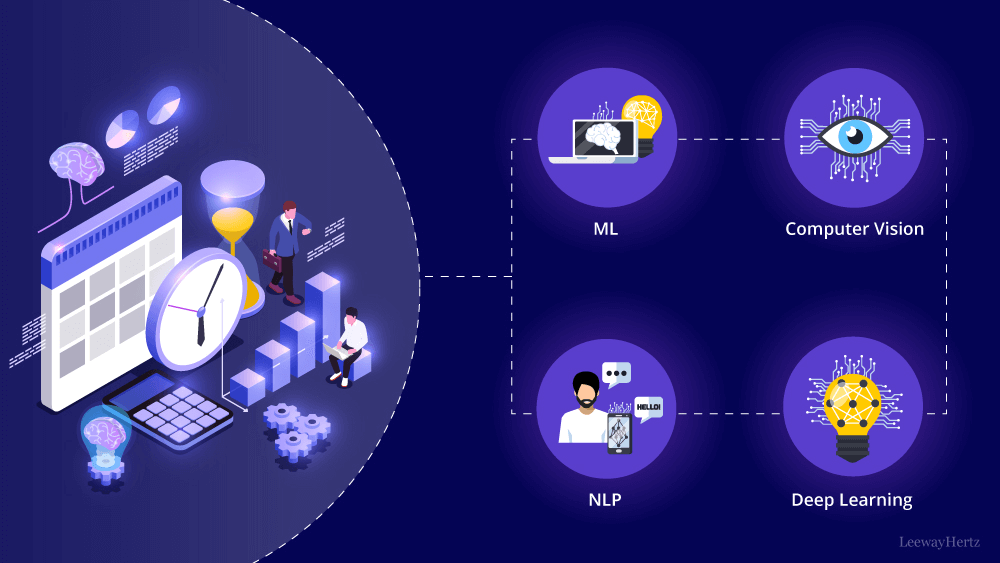

Operational efficiency did not become a priority overnight. It crept back into boardroom conversations after years of being overshadowed by growth, branding, and scale. Somewhere between supply chain disruptions, staffing shortages, and rising costs, businesses began paying closer attention to how work actually moved through their organisations. Artificial intelligence entered this moment not as a grand vision, but as a practical response to exhaustion.
In many companies, the earliest signs of AI were barely noticed. Forecasting models quietly improved inventory planning. Scheduling software stopped overbooking people. Customer queries were routed faster, with fewer handoffs. These were not dramatic changes, but they accumulated. AI business efficiency emerged less as a strategy and more as a relief from daily friction.
Operational work has always carried invisible weight. The hours spent reconciling data across systems, chasing approvals, correcting avoidable errors. Automation tools began absorbing these tasks, not by mimicking human effort but by removing the need for it altogether. A purchase order no longer waited for three inboxes to align. A report no longer required manual cleanup at the end of the week.
What surprised many managers was how quickly expectations shifted. Once a process ran smoothly under AI supervision, tolerance for delay vanished. Systems flagged issues early. Bottlenecks became visible. The idea that inefficiency was simply “how things work” became harder to defend when software demonstrated otherwise.
AI has also changed the texture of decision-making. Instead of relying on historical averages or instinct, teams now see patterns as they form. Demand spikes are anticipated. Equipment failures are predicted rather than endured. These systems do not eliminate judgment, but they narrow the margin for guesswork. Decisions arrive earlier, with clearer consequences attached.
There is a quiet confidence that settles into organisations once operational chaos recedes. Meetings shorten. Reporting cycles tighten. People stop firefighting and start planning. The appeal of automation tools is not speed alone, but stability. When systems behave predictably, people can afford to think.
Still, the transition has not been seamless. Early implementations often revealed uncomfortable truths. AI systems exposed inefficiencies that had long been normalised. Redundant roles. Poorly defined processes. Workarounds masquerading as expertise. For some teams, this visibility felt threatening rather than helpful.
I remember sitting in on a review where an AI dashboard calmly showed that a long-standing approval step added no measurable value, and noticing how quiet the room became.
Resistance often softened once benefits became tangible. Employees found that automation removed the most tedious parts of their roles, not the meaningful ones. Data entry faded. Monitoring replaced manual checking. Time was redirected toward tasks that required interpretation, empathy, or creativity. AI business efficiency proved less about replacing people and more about redistributing attention.
Operational efficiency also reshaped accountability. When automation tools track workflows end to end, responsibility becomes harder to diffuse. Missed deadlines have timestamps. Delays have owners. This transparency can sharpen performance, but it also demands trust. Without it, efficiency gains are overshadowed by anxiety.
Smaller businesses approached AI differently. Without layers of legacy systems, they adopted targeted tools that addressed specific pain points. A logistics firm optimised routes. A retailer automated stock replenishment. A consultancy streamlined proposal generation. These focused deployments often delivered faster returns than sprawling enterprise projects.
The real shift occurred when AI moved from assistance to orchestration. Systems began coordinating multiple processes simultaneously. Sales forecasts influenced staffing. Maintenance schedules adjusted inventory. Customer behaviour informed supply planning. Efficiency became systemic rather than departmental.
There is an emotional dimension to this change that data rarely captures. Relief, when systems catch errors before they escalate. Unease, when decisions feel increasingly mediated by algorithms. Admiration, when complexity is handled with quiet competence. Businesses are still learning how to sit with these feelings.
Critics argue that operational efficiency risks flattening organisational culture. When every task is optimised, spontaneity can suffer. Informal problem-solving gives way to predefined paths. The challenge lies in choosing what to automate and what to preserve. Not every inefficiency is waste. Some are where learning happens.
The most thoughtful organisations treat AI as an operational partner, not an authority. They allow systems to recommend, not dictate. Human oversight remains visible. Exceptions are permitted. Efficiency serves strategy, not the other way around.
AI business efficiency has also altered how success is measured. Metrics now update continuously. Performance is observed in real time. Annual reviews feel outdated when systems provide constant feedback. This immediacy sharpens focus but can also fatigue teams if not managed carefully.
What stands out is how quickly operational expectations have recalibrated. Processes that once took days now feel slow if they take hours. Accuracy that was acceptable last year now feels careless. Automation tools quietly reset the baseline.
The story of AI improving operational efficiency is not one of disruption, but of accumulation. Small improvements layered over time, reshaping how businesses function from the inside out. It is less about transformation slogans and more about work that flows, pauses less often, and recovers faster when it falters.
Efficiency, once treated as a constraint, has become an environment. And AI is now part of the architecture that holds it together.
