

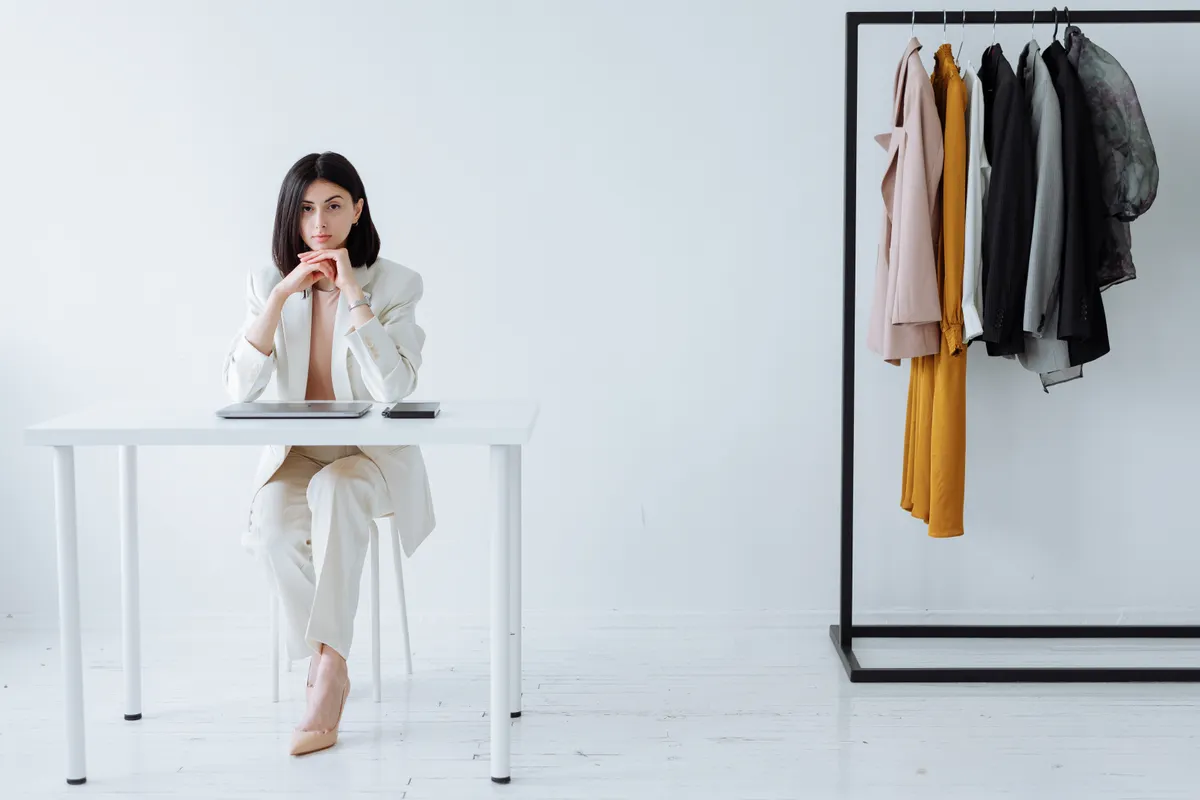

The office outfit formulas a working fashion editor actually reaches for, season after season, are rarely the ones dominating a trend report. Stylist recently posed the question that most women with a wardrobe and a desk job have quietly asked themselves: when you do this for a living, what do you actually wear?
Why office outfit formulas matter more than trends
There is something quietly useful about the formula. Not the capsule wardrobe sold to us every January, with its twelve interchangeable beige pieces and its promise of effortless dressing, but the real working formula: the combination of proportions, fabrics and silhouettes that a person returns to because it simply functions. It does not crease catastrophically on the commute. It reads as pulled-together in a morning meeting and does not require a change of shoes by lunch. It fits the body that actually walks through the door, rather than the body the trend deck imagined.
For someone writing about fashion professionally, the relationship with getting dressed for work is, if anything, more fraught than for someone outside the industry. There is an implicit expectation of effort, of commentary, of being visibly conversant with whatever the current moment demands. And yet the work still has to get done, the deadlines still arrive, and the outfit still needs to survive a full day rather than a single photograph.
The formulas that endure in a working fashion editor’s wardrobe tend to share certain qualities. They are built around fit rather than novelty. They prioritise fabric weight and drape, the kind of trouser that holds its line through an eight-hour day, the knit that does not bobble by Wednesday. They work across the season with minimal intervention, which means they are neither so light as to require layering by October nor so heavy as to make a heated office unbearable.
The case for returning to what works
What a professional fashion editor’s go-to formulas reveal, more than any specific garment, is an implicit argument against the tyranny of the new. The industry runs on novelty; the working wardrobe runs on reliability. The five formulas that Stylist’s fashion writer actually relies upon are, by the admission embedded in that framing, the ones that have survived repeated testing, not the pieces picked up in a moment of editorial enthusiasm and quietly retired by the following month.
There is something worth sitting with in that distinction. A formula, properly understood, is not laziness. It is the accumulated result of paying close attention to what works on a specific body, in a specific context, over a long period of time. It is, in that sense, the most considered form of getting dressed: the one that has already done the work so that you do not have to do it again every morning.
The Stylist piece sits behind a sign-in wall, available in full to registered readers on stylist.co.uk.
