


The Maria Grazia Chiuri Fendi debut arrived in Milan carrying the particular weight of a homecoming: not a fresh start, but a return to the place where everything began. Chiuri joined Fendi in 1989, at the age of 24, fresh from Milan’s Istituto Europeo di Design, and spent a decade learning the language of craft, collaboration, and the kind of female-led creative energy that the five Fendi sisters (Paola, Anna, Franca, Carla and Alda) brought to the Roman maison in its family years.
Thirty-seven years on, she has come back. The motto she has chosen to mark her return is ‘Less I, More Us’, a phrase that gestures directly at the collective spirit she first encountered under the sisters’ stewardship, before the house became part of LVMH in 2001. It is not a slogan so much as a statement of method.
The Architecture of the Maria Grazia Chiuri Fendi Debut Collection
Chiuri described the Fendi of the late 1980s and 1990s as a ‘sorority’, and the sisters as ‘great visionaries’ for bringing Karl Lagerfeld into their world as early as 1965, translating an artisanal family brand onto a global stage. Working alongside Silvia Venturini Fendi, she was part of the team that created the baguette bag in 1997, one of the defining accessories of its decade. She left in 1999, moving first to Valentino with Pierpaolo Piccioli, then to Dior. Now, returning, she speaks of seeing Fendi ‘with fresh eyes, but also through my recollections.’
If her nine years at Dior womenswear and couture were drawn towards 1950s silhouettes, the new Fendi era is positioned differently: the geometric lines of the jazz age, the art deco roots of a house founded in 1925, and the Viennese Secession that Lagerfeld’s long tenure wove into the marque’s DNA. Fendi is, as Chiuri puts it, ‘so clean’, and her debut collection leaned into that quality with discipline.
The first look set the register: a silk shirt dress and blazer, all in black, monochromatic and refined. From there, the collection moved through tailored silhouettes built, she says, to work on any gender. Lace flapper dresses carried striking geometric detailing as a tribute to the house’s art deco inheritance. Detached white cotton collars, worn across many looks, were a considered nod to Lagerfeld. The vocabulary was restrained, which, given the visual noise of the broader fashion moment, read as confidence rather than caution.
A Shared Wardrobe and the Renovation of the House’s Codes
The most consequential move in the Maria Grazia Chiuri Fendi debut was structural rather than decorative. Chiuri told WWD that she had streamlined her practice to work with the same team across menswear and womenswear. ‘We do a coat, we do a jacket, we do pants. We change the size, but it’s the same,’ she said, noting that she often wears her husband’s coats herself. The result is what she calls ‘a shared wardrobe’: masculine and feminine versions of many looks shown side by side, a proposition that feels both practical and quietly political.
Beyond the tailoring, the catwalk offered breadth: zip-up flight suits and joggers alongside bohemian embroidered gilets worn with denim board shorts, and, at the craft end of the spectrum, coats and jackets in handcrafted leather and lace that demonstrated why the house’s atelier reputation remains intact.
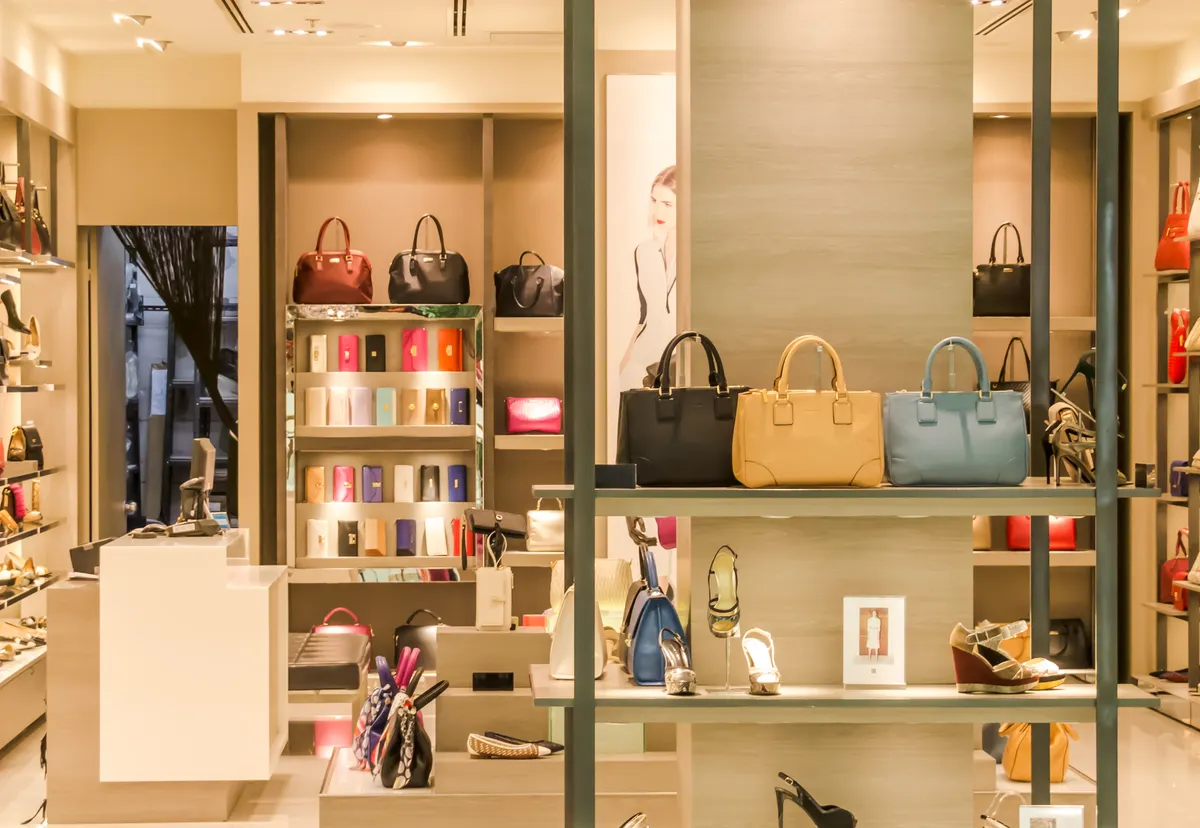
Bags, always central at Fendi, carried the Chiuri imprint from the first showing. Heavily embellished baguettes and perforated shoppers bore a refreshed, more geometric version of the double-F logo, developed in collaboration with graphic artist Leonardo Sonnoli. The intention, Chiuri has said, is to treat the logo as a signature rather than an all-over print. The shift is subtle but legible.
The collaborations she became known for during her Dior years continue here, now rooted in Italian cultural territory: the estate of sculptor and poet Mirella Bentivoglio for jewellery and graphic tees, and Italian artist Sagg Napoli for fluffy football scarves printed with phrases, among them ‘Rooted but not stuck’. The Istituto Europeo di Design, where Chiuri trained before walking into Fendi’s world all those years ago, might as well have handed her the brief: tradition, innovation, and the knowledge of where you came from.
