

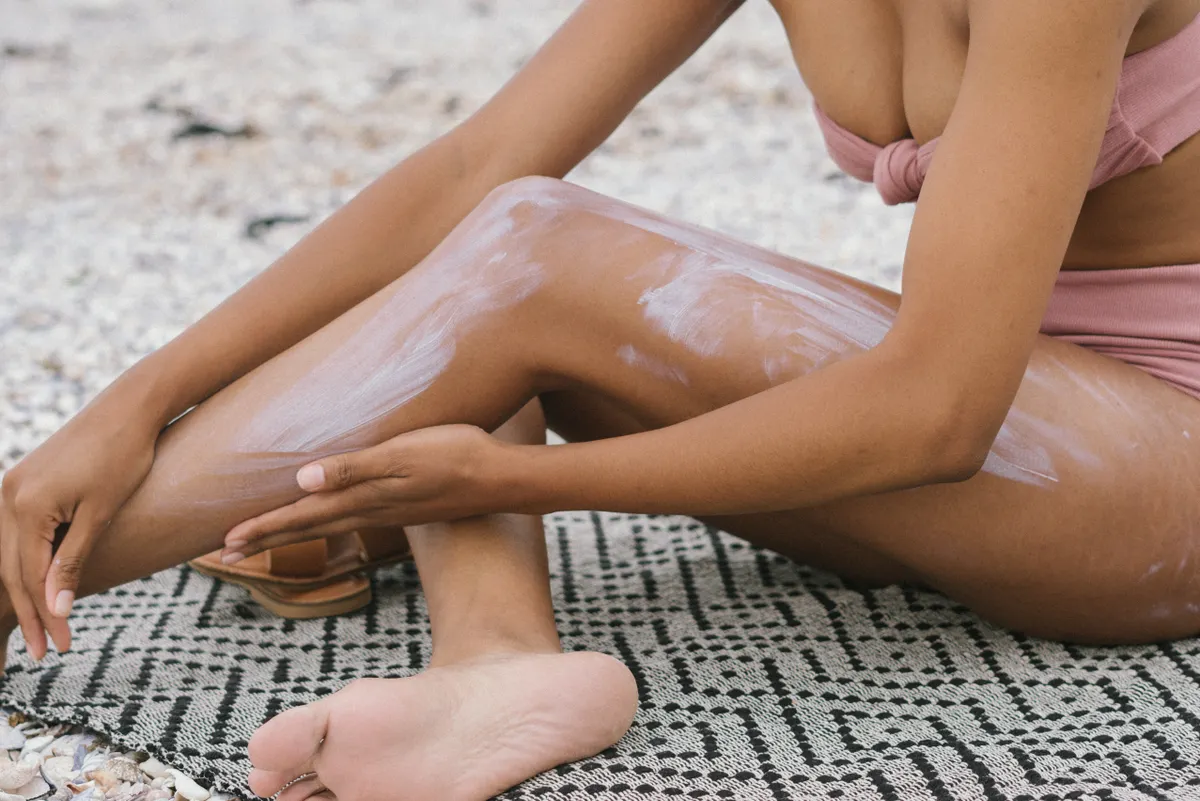

Repairing skin after sunburn properly (rather than just reaching for whatever is closest in the bathroom cabinet) turns out to matter rather more than most of us assume. Britain’s run of back-to-back heatwaves has delivered a predictable consequence: a great many people whose skin has had considerably more UV radiation than intended. Whether it happened on a park lawn, a coastal walk or a lunchtime bench, the result is the same. Two consultant dermatologists have set out exactly what helps and, perhaps more usefully, what to stop doing immediately.
Understanding what sunburn actually is
It is worth being clear on the biology first. ‘Sunburn is an inflammatory response to excessive UV radiation,’ says Dr Alexis Granite, consultant dermatologist and founder of Joonbyrd, who holds a dual medical licence in both the UK and US, according to Hypebae. ‘UV damages the DNA within skin cells, triggering inflammation as the body tries to repair the injury. That response is why skin becomes red, hot, tender and, in more severe cases, swollen or blistered.’ The redness and heat are not incidental; they are the body mounting a repair operation. Which is also why interfering with the wrong products can derail the process entirely.
Dr Granite launched Joonbyrd in 2024, and Dr Ellie Rashid, consultant dermatologist at Welbeck, joins her in offering advice that is, reassuringly, more straightforward than the skincare industry might have you believe.
Repairing skin after sunburn: the right order of operations
The first instruction is blunt. Get out of the sun. Sunburnt skin is highly sensitive and vulnerable to further damage, and both experts are clear that additional UV exposure (even with SPF applied) will worsen matters. Then, cool the skin down. Burnt skin retains heat, and that trapped warmth can continue driving damage into the tissue even after you have moved indoors. ‘Apply something cool against the skin, a cold shower or a damp flannel,’ says Dr Rashid.
Hydration follows, inside and out. ‘Burnt skin has a disrupted barrier, which means it can’t hold onto water as well, which is a large part of why it feels tight and sore,’ says Dr Rashid. Both dermatologists recommend a gentle, fragrance-free moisturiser containing glycerin, hyaluronic acid, ceramides or panthenol. These ingredients help replenish moisture and support barrier repair without aggravating already-compromised skin. Dr Rashid also recommends drinking plenty of water: sunburn draws fluid to the skin’s surface and away from the rest of the body, and dehydration follows more quickly than most people expect.
Dr Granite’s note on expectations is worth holding onto: ‘There is no magic bullet when it comes to skin repair, and much of it is the tincture of time.’ The right products make skin more comfortable; they do not dramatically accelerate what is, fundamentally, a biological repair process that requires patience.
Anti-inflammatory medication such as ibuprofen can help reduce pain and inflammation. Dr Rashid suggests taking it early if possible, ‘since it interrupts the prostaglandin response, the chemical response that drives inflammation and pain’. Loose-fitting clothing to minimise friction is also recommended by both. And sleep matters: ‘Sleep well to help repair processes in the skin,’ says Dr Rashid, who also points to diet as a longer-term, preventative measure, a small study suggests a tomato-rich diet adopted before summer may increase the skin’s protection from sunburn, though this is of no use after a burn has already developed.
What to leave alone entirely
Active ingredients (vitamin C, retinoids, exfoliating acids including AHAs and BHAs) are a firm no while skin is healing. ‘These ingredients can further irritate an already compromised skin barrier,’ says Dr Granite. Heavy, occlusive face oils are also on the avoidance list: they can trap heat in skin that is already running warm.
Peeling skin must not be picked, and blisters must not be burst. ‘This can delay healing and lead to prolonged discolouration,’ Dr Granite says. Dr Rashid adds that it ‘risks scarring and post-inflammatory pigmentation, particularly in deeper skin tones’. The blisters exist for a reason: they protect the underlying skin while it heals.
Mild sunburn (redness, tenderness, peeling) can typically be managed at home with cooling measures, gentle moisturiser and plenty of water. The point at which to call a doctor is clear. ‘You should seek medical advice if there is blistering, especially over a large area, or if the burn covers a big proportion of the body,’ says Dr Rashid. The symptoms that require prompt attention: fever, chills, nausea, vomiting, dizziness, confusion, a racing heart or a persistent headache. Signs of infection (spreading redness, increasing pain, swelling, pus) need reviewing without delay. Those are the moments when a damp flannel and a good moisturiser, however well-chosen, are not going to be sufficient. Products recommended by Dr Granite include LookFantastic-stocked Avène Cicalfate+ Restorative Protective Cream, a fragrance-free formula she describes as a moisturising film for compromised skin.
