

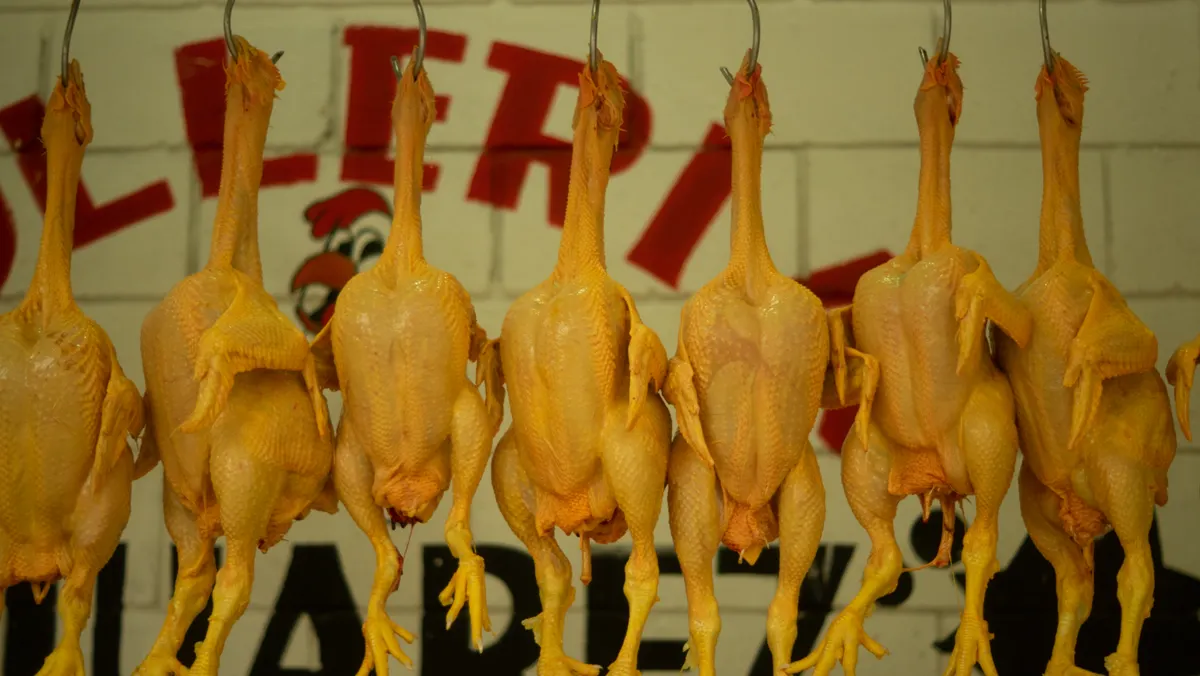

The salmonella food hygiene tips most of us think we already know are, it turns out, the ones we are most likely to be doing incorrectly. A salmonella expert has set out eight pieces of kitchen guidance that cut against the casual habits accumulated over years of home cooking, and the cumulative effect is quietly alarming.
Why salmonella food hygiene tips matter more than ever
The timing is not incidental. In September 2024, the VCU Health network reported that the Centers for Disease Control and Prevention had issued a food safety alert following a salmonella outbreak linked to eggs. Eggs: the ingredient in the fridge that most of us handle with the least ceremony, cracking them one-handed over a bowl and moving on. The outbreak was a reminder that the bacterium does not discriminate by kitchen quality or cook experience.
Salmonella itself is not a single, tidy pathogen. It spreads through contact with contaminated food, unwashed surfaces, and the kind of cross-contamination that happens in the thirty seconds between handling raw chicken and reaching for a tea towel. The expert’s eight-point framework addresses precisely these moments, the ones that feel too small to worry about until they are not.
Storage, temperature, and the logic of the bottom shelf
Several of the recommendations concern the refrigerator, and with good reason. Research published by PMC confirms that raw meat and poultry should be stored in sealed bags at the bottom of the fridge as early as possible after purchase. The reasoning is straightforward: any liquid that escapes a package of raw chicken will drip down, not up. Storing it on a higher shelf means it drips over everything below it. This is the sort of thing that feels obvious once stated and is nonetheless ignored the majority of the time.
Temperature control is the other refrigerator variable that gets treated as approximate when it is, in fact, specific. The CDC is clear: refrigerators should be kept at 40°F (approximately 4°C) or below, and freezers at 0°F (approximately -18°C) or below. The bacterium does not die in a fridge; it simply slows down. Above 40°F, it does not slow down at all.
Cooking temperature carries the same need for precision. The PMC research specifies that for a whole chicken, cooking should reach 180°C for a minimum of 20 minutes to achieve the internal temperature required to destroy salmonella. A thermometer, not the colour of the juices or a confident feeling, is the only reliable instrument here. The “juices run clear” rule has been folklore for decades; it is not food science.
The remaining points in the expert’s framework return repeatedly to the idea of separation: separate boards for raw and cooked food, separate utensils, separate handwashing moments. It sounds procedural, almost clinical, and that is rather the point. The kitchen is not a laboratory, but it benefits from some laboratory discipline when raw protein is involved.
There is also the matter of leftovers, which the guidance treats with considerably more rigour than most households do. Cooling food rapidly, storing it within two hours of cooking, and reheating it to a temperature that actually reaches the centre of the dish are not optional refinements. They are the difference between a safe meal and a consequential one.
None of this is new science. What changes is the context: a 2024 outbreak alert, a body of peer-reviewed guidance that is freely available, and the persistent gap between what people know they should do and what they actually do at 7pm on a Tuesday when dinner is running late. The expert’s list is not a lecture. It is, more usefully, a checklist, and the CDC’s food safety guidance offers a practical starting point for anyone who wants to verify their own kitchen habits against the evidence.
