

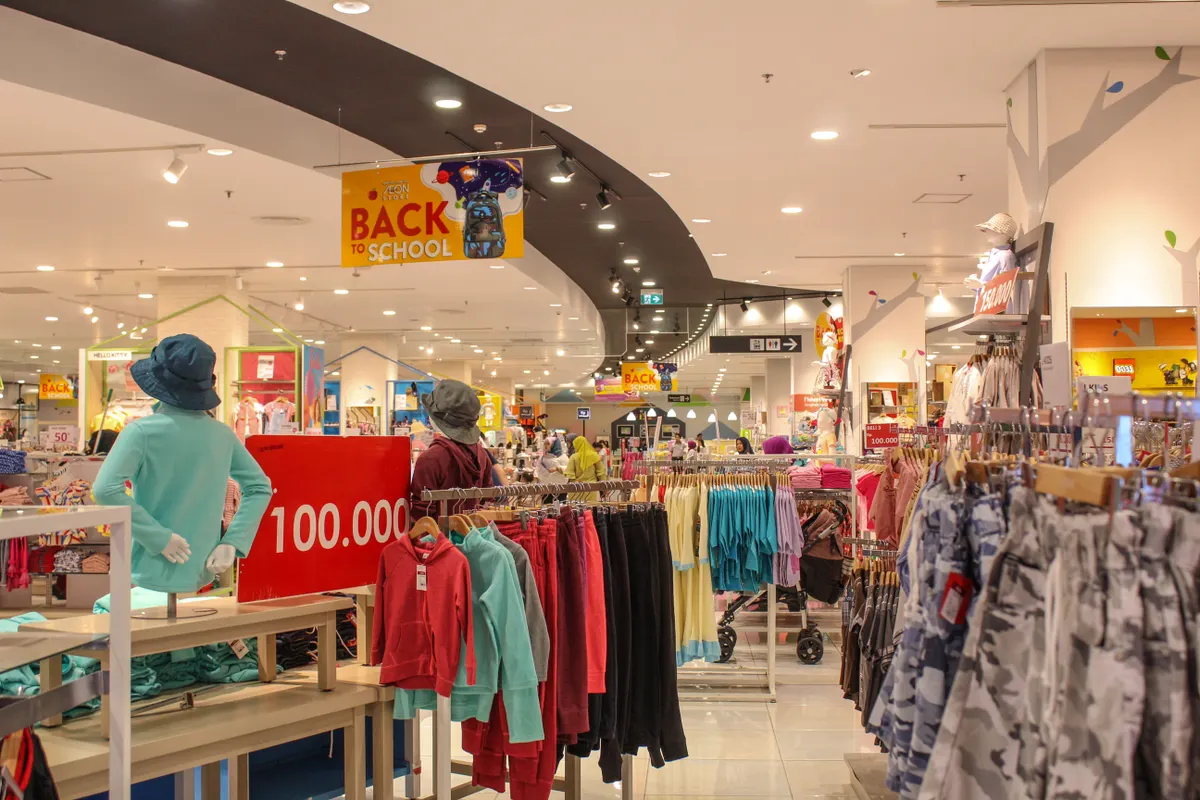

The question of gender labels on children’s clothes has been simmering in the background of retail for years, but it took a train journey and a bored teenager to put it plainly. Anna Whitehouse, motherhood editor at Stylist, asked her two daughters what business they would start with unlimited funds. Her youngest wanted a sweet shop built from sweets. Her 13-year-old wanted a clothes shop with no boy or girl labels at all.
‘They’re just clothes,’ the teenager told her. ‘It’s just a hoodie.’ The prompt was a recent experience at a till, where a shop assistant asked whether she had meant to pick up a boys’ hoodie. She liked the fit. She liked the pockets. She did not like being asked to justify the choice.
Why gender labels on children’s clothes still shape what kids reach for
Whitehouse writes that her daughter is not making a statement so much as working herself out, as 13-year-olds are supposed to do. Last week a frilly pastel-blue dress to a party; yesterday skater shorts and Vans. The wardrobe is doing what it should: accommodating a person who is still becoming one. The issue is that the shop floor, divided as it almost always is into boys and girls, makes that process more fraught than it needs to be.
The daughter’s observation about boys extends the point. ‘I think there are lots of boys who want to probably wear a skirt but feel even worse than I do about going into the girls’ section. So, they don’t.’ Whitehouse notes that the cultural rehabilitation of the ‘tomboy’ has no real equivalent for boys. The Billy Elliott discomfort around boys in ballet shoes, in tutus, in anything not coded masculine, has not shifted at the same pace. Gendered rails do not create that discomfort, but they do reinforce it every time a child has to cross an invisible line to find something they want to wear.
What the market is already telling retailers about gender labels on children’s clothes
The commercial logic for change is, at this point, straightforward. According to Deepwear, the global unisex clothing market stood at USD 11.73 billion in 2024 and is projected to reach USD 61.96 billion by 2033, growing at a compound annual rate of 22.9%. That is not a niche interest finding its footing; that is a structural shift in how people want to buy clothes.
Younger shoppers are driving it. Research from DataIntelo puts the proportion of Gen Z shoppers in the United States who actively prefer brands offering gender-neutral or non-binary apparel options at approximately 56%, up from 28% in 2019. That is a doubling of demand in roughly half a decade, and it maps almost exactly onto the generation currently standing at children’s and teenagers’ clothing rails wondering why the hoodie they want is three sections away.
Inditex, the parent company of Zara, moved on this in 2024, launching a dedicated genderless collection across select markets and drawing on its network of over 5,800 stores to give the range meaningful reach. It is early, and whether the collection will expand or become a permanent fixture of the floor plan is not yet clear. But the fact that one of the world’s largest fashion retailers is testing the proposition at scale is not nothing.
Whitehouse frames the binary divide partly as a revenue problem, which it plainly is. A shop that organises stock by colour and silhouette rather than by assumed gender sells to everyone who wants that colour and that silhouette. The girl in the boys’ section and the boy too self-conscious to cross into the girls’ section both represent lost conversions. The 13-year-old on the train understood this instinctively: she would simply have shops with ‘colours and styles, not male and female divisions.’
There is something almost embarrassing about the gap between what the market data shows and what most high-street shop floors still look like. The demand for clothing stripped of gender labels is there, measurable and growing. The infrastructure to meet it is being built, slowly. The children are already ahead of the signage.
