

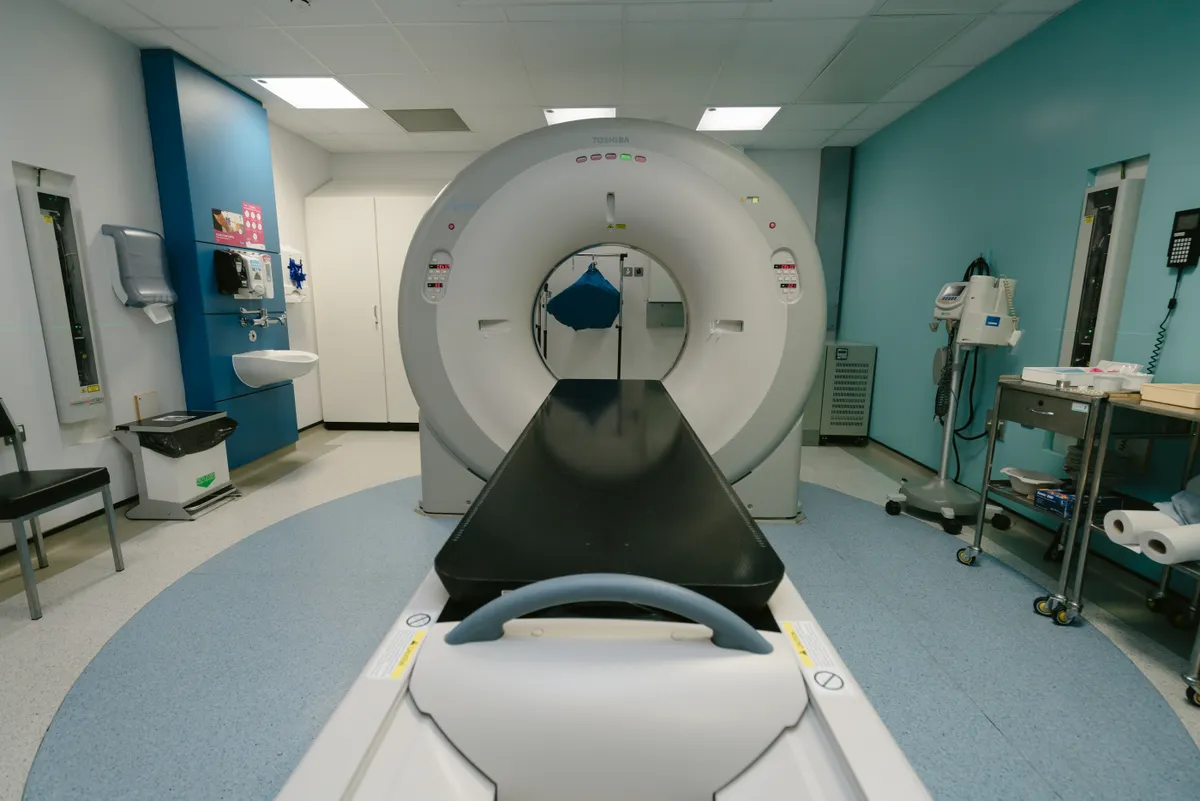

Whole-body MRI health anxiety is, for many women, not an abstract concern but a very specific dread: the kind that arrives after a parent’s terminal diagnosis and does not quietly leave. A piece published by Stylist asks the question directly, can a whole-body MRI scan help to ease that fear, or does it simply replace one form of uncertainty with another?
It is a question worth sitting with. The circumstances that prompt it are not unusual. A mother’s cancer diagnosis. A daughter left with the particular, grinding terror of genetic inheritance and statistical shadow. The instinct, in that situation, is to look for something to do with the fear. And in an era when private whole-body MRI scanning has moved from the rarefied preserve of Silicon Valley executives to a service available in British cities, the scan presents itself as a logical answer: see everything, know everything, act accordingly.
What whole-body MRI health anxiety actually looks like in practice
The emotional calculus of scanning is more complicated than its marketing tends to suggest. On one side: the appeal of certainty, or at least the closest thing to it that medicine can currently offer. According to TrueScan, a comprehensive, expert-read, negative or well-characterised scan result reduces uncertainty in a way that an annual physical cannot replicate. For someone already living inside health anxiety, that distinction is not small.
TrueScan also cites a 2016 prospective study in which whole-body MRI successfully identified clinically significant findings in asymptomatic patients, with approximately 5% of the screened population going on to receive treatment that directly resulted from scan findings. That figure cuts both ways, of course. It is a case for scanning: something was found, something was done. It is also a reminder that a scan is not a clean bill of health so much as a snapshot of a body at a single moment in time, with all the incidental findings and follow-up questions that can entail.
This is where the anxiety question becomes genuinely thorny. Scanning can surface findings that require further investigation, and the period between scan and explanation carries its own particular weight. For someone already inclined towards health anxiety, the gap between “we found something” and “here is what it means” is not a neutral interval.
The evidence on anxiety after scanning
What the evidence does suggest, reassuringly, is that this anxiety tends to be time-limited. According to a white paper published by Prenuvo, anxiety following whole-body MRI is usually temporary, with most patients returning to baseline levels of concern once findings are explained and a plan is in place. The scan itself, in other words, is not the thing that prolongs worry. The absence of explanation is.
That framing changes the conversation about who a whole-body MRI is and is not for. It is not a treatment for health anxiety in any clinical sense; no radiologist would claim otherwise. But for someone whose anxiety is rooted in the specific, rational fear of not knowing, rather than a generalised tendency towards catastrophising, it may shift the ground beneath them. The difference between “I am frightened because I do not know” and “I am frightened because I know what is there and what is being done” is not trivial, even if neither state is entirely comfortable.
What is less clearly addressed in the conversation around private scanning is the emotional preparation required. Walking into a scanner carrying grief, genetic worry, and a deep need for reassurance is a different experience from a routine check in a stable psychological moment. The question of whether the scan will help is, in part, a question about what kind of help you are actually looking for, and whether a piece of imaging can carry that weight.
For women navigating this specific situation, the Stylist piece is worth reading as a piece of emotional testimony rather than medical guidance. The clinical picture, as the Prenuvo and TrueScan research frames it, is that the scan itself rarely makes anxiety worse in the long run. The preparation, the context, and the follow-up conversation are where the real work happens.
